Article MT204
A Story to Tell:
Keith Summers in Suffolk 1972-79
Musical Traditions Records' third CD release of 2007: A Story to Tell: Keith Summers in Suffolk 1972-79 (MTCD339-0), is now available. See our Records page for details. As a service to those who may not wish to buy the record, or who might find the small print hard to read, I have reproduced the relevant contents of the CD booklet here.
[Track Lists]
[Introduction]
[In His Own Words]
[The Performers]
[CD One]
[CD Two]
[Credits]
CD 1:
1 -
2 -
3 -
4 -
5 -
6 -
7 -
8 -
9 -
10 -
11 -
12 -
13 -
14 -
15 -
16 -
17 -
18 -
19 -
20 -
21 -
22 -
23 -
24 -
25 -
26 -
27 -
28 -
29 -
30 -
31 -
32 -
33 -
34 -
35 -
36 -
37 -
|
Doing My Duty
Abie My Boy
Blow the Candle Out
Highwayman and the Farmer's Daughter
Coal-Black Mammy
Talking about learning songs
Three Jolly Sportsmen
Green Bushes
Maggie May
Mary Anne
Soldier's Joy
All Tattered and Torn
The Nutting Girl
The Kildare Fancy
The Ship I Love
I'm a Man you don't Meet Every Day
Step Dance Tune
The Parson's Creed
Cock of the North / Pop Goes the Weasel
The Seeds of Love
The Drowned Lover
The Lincolnshire Poacher
Talking about his grandfather
Fairy's Hornpipe and dancing doll
You Can Look but you Mustn't Touch!
Wild Flowers
The Yellow Handkerchief
Poem
The Rakes of Mallow
The Baby's Name
The Flowers of Edinburgh
The Roving Gypsy
Talking
Polka(Jingle Bells)
Australia
The Female Drummer
The Sailor's Hornpipe
|
Ted Cobbin
Ted Cobbin and Peter Plant
William 'Jumbo' Brightwell
Alec Bloomfield
Fred Pearce
Cyril Poacher and Geoff Ling
Bob Scarce
Geoff Ling
Geoff Ling
Arthur 'Spanker' Austin
Fred List
Percy Ling
Cyril Poacher
Fred 'Pip' Whiting
Fred 'Pip' Whiting
Alec Bloomfield
Peter Plant
William 'Jumbo' Brightwell
Tommy Williams
Alec Bloomfield
William 'Jumbo' Brightwell
Billy List
George Ling
Fred 'Pip' Whiting and Cecil Fisk
Jimmy Knights
Alec Bloomfield
Cyril Poacher
Harkie Nesling
Harkie Nesling
Harkie Nesling
Fred 'Pip' Whiting
Fred 'Pip' Whiting
Harkie Nesling and Fred 'Pip' Whiting
Harkie Nesling
Cyril Poacher
Bill 'Dodger' Brabbing
The Peacock Band
|
3:05
0:57
2:44
3:03
1:10
3:50
5:25
3:29
2:49
0:40
0.36
3:25
3:02
1:14
2:23
1:42
0:57
1:15
0:41
4:04
3:39
1:38
1:06
2:02
2:07
2:29
3:31
0:34
0:47
1:29
1:28
2:50
1:05
1:15
2:05
2:05
0:57
| | | | Total: | 79:51
|
CD 2:
1 -
2 -
3 -
4 -
5 -
6 -
7 -
8 -
9 -
10 -
11 -
12 -
13 -
14 -
15 -
16 -
17 -
18 -
19 -
20 -
21 -
22 -
23 -
24 -
25 -
26 -
27 -
28 -
29 -
30 -
31 -
32 -
33 -
34 -
35 -
36 -
37 -
38 -
|
Truly Fair
The Recruiting Sergeant
Strolling down to Hastings
Chinaman
Pigeon on the Gate
The Lobster
Old General Wolfe
A Broadside
Unidentified Tune
The Flower of London
The Indian Lass
Oscar's Waltz / Charlie Philpott's Waltz
Out with my Gun in the Morning
Talking
Duckfoot Sue
Talking
Wormwood Scrubs
Phil the Fluter
Paddy and the Rope
The Oak and the Ash
Sailor's Hornpipe
Lamplighting Time in the Valley
Step Dance Tune
Pretty Little Mary
The Next Song in the Programme
Sailor's Hornpipe / Pigeon on the Gate
Old Brown sat in the Rose and Crown
Cock of the North
Talking about The Ship
The Burden of the Spray
The Maid and the Magpie
Red Sails in the Sunset
Unidentified Tunes
The False Hearted Knight
Young George Oxbury
The Barndance
The Morals
Jim the Carter's Lad
|
Font Watling and Wattie Wright
George Ling
Aileen Stollery
Aileen Stollery
Font Watling and Wattie Wright
Percy Ling
Alec Bloomfield
Bob Scarce
George Woolnough
George Dow
William 'Jumbo' Brightwell
Reg Reeder
Jimmy Knights
Jimmy Knights
Jimmy Knights
Jimmy Knights
Jimmy Knights
Tommy Williams
Billy List
Charlie Whiting
George Woolnough
Cyril Poacher
Oscar Woods
Percy Ling
Albert Smith
Albert Smith
Albert Smith
Fred Pearce
Cyril Poacher and Geoff Ling
Bob Scarce
Cyril Poacher
Fred Eley Whent
Fred Eley Whent
William 'Jumbo' Brightwell
Alec Bloomfield
Fred List
Alec Bloomfield
Ted Cobbin with Peter Plant
|
0:35
1:42
1:44
1:28
0:40
2:11
3:07
3:34
1:12
3:36
2:46
3:03
3:04
0:46
1:46
1:32
3:23
0:54
2:42
3:25
0:52
4:02
0:53
2:57
0:16
0:26
0:28
0:52
1:12
4:20
2:59
1:14
1:25
4:47
2:07
1:06
2:04
2:37
| | | | Total: | 79:58
|
| 
|
Traditional Songs and Music from Suffolk, recorded by Keith Summers, 1971-1979
[It was my] great good fortune to have met, in such a short period, so many thoroughly genuine, fascinating and talented people ... they all had a story to tell. I would like to think that I did my best to tell it.
Keith Summers, 1999
I visited Keith in his bungalow in Southend in October 2003 and again in January 2004. These were social visits, a chance to talk about old times, and to record Keith talking about his life and his recording of traditional music and song.
Keith had initially made recordings just for his own pleasure. Self-funded and usually working alone, he spent much of his spare time during the 1970s travelling around Suffolk. He got to know well and recorded many of the traditional singers and musicians that still formed an important part of the social life of an area.
Thanks to Keith’s efforts, and his awareness that this unique material was in danger of being lost, a wealth of ballads, topical songs and stories as well as dance music, step-dancing and popular music, recorded in public houses and in homes and cottages, has been documented and preserved.
Some of his Suffolk recordings had been issued. Sing, Say and Play and The Earl Soham Slog were released by Topic records in 1978. He later had some tracks included on The Voice of the People, Topic’s 20 CD set, issued in 1998.
Keith’s original tapes had been deposited in the National Sound Archive, as part of their Traditional Music in England Project. In return he had CD-R copies.
Although very unwell, he had been planning a double CD of his Suffolk field recordings. Keith had spent many hours listening to his recordings, some of which he hadn’t heard for over thirty years, and had made his selections. He was particularly excited about the prospect as he had selected many of his earliest recordings. These early performances were recorded on non-professional equipment in less than ideal conditions but they captured local singers and musicians entertaining a very lively and appreciative company.
Sadly Keith didn’t live to bring these CDs to fruition. In accordance with his wishes, John Howson issued Good Hearted Fellows (Veteran VT154CD) in 2006 using tracks from those that Keith had intended for his double CD. I have added to the tracks that remained to make up this double CD; my selections are marked*. I have also edited and cleaned up tracks where needed.
Keith Summers became ‘seriously interested’ in listening to music when he was about 12. His introduction was the skiffle music of Lonnie Donegan. He later heard Blues music and started to collect obscure LPs which were imported from the US. His tastes broadened as he discovered American Old Timey and Scottish and Irish traditional music which was then becoming available on record. Keith soon developed a keen ear for the ‘real thing’.
At the age of about 15, on a regular trip to Collett’s record shop, London, Keith was given a record to listen to from the 10 LP set of the Folksongs of Britain series just released by Topic Records. It was to prove life-changing.
The following, entirely in Keith’s own words, is taken from a recording that I made during my visit to him on 10/10/03
I was in Collett’s and Hans Fried - who always pointed me towards things that I might be interested in - said, “Listen to this. It’s got some Irish stuff on it. It’s also got a lot of Scottish and few tracks of English”. I said, “English? What do you mean by English?” He said, “English folk songs”. Of course my initial reaction was Do you Ken John Peel, played by the school music teacher. I thought “Oh gawd!” but I said, “OK I’ll have a listen”. As luck would have it he gave me one that had three or four tracks from Blaxhall Ship on it. I whacked those on and I thought “Bloody hell, I’ve never heard anything like this before.”
I started reading the notes and there was absolutely bugger all on these notes to give any information about the background to the singers. There was background to the songs, which I wasn’t particularly interested in. I’m not a folksong collector and I’ve never pretended to be. I haven’t got a great deal of interest in the songs I’ve collected. I’ve got no problems with people who have, but it’s not my main interest. I’m interested in the singers themselves. Why they’ve kept it going and how they’ve kept it going through singing in pubs, at home singing to their families. That’s what interests me, but primarily singing in pubs. As I later found out - in Suffolk in particular - there was a network of these pubs where the musicians used to go. The singers didn’t - they didn’t used to travel out of their villages - but the musicians would go and entertain. It was fascinating.
So I started delving around to see if I could find out anything about English traditional singing and Blaxhall Ship in particular. This would have been I would guess around '67/68. I was about 20 then. I remember once they had a sale at the Cecil Sharp Folk Shop where every magazine was one penny, old money. I must have bought 200 copies of Sing Out, Bluegrass News, etc. I don’t know how I carried them all home on the train, but I did. Amongst them there were one or two magazines which carried articles on English traditional singing but again no background to it at all. I thought no more about it, to be honest. I’d been to a couple of folk clubs by then. One in Rochford and there was a good one at Benfleet, which was just down the road. Not because I was particularly interested in folk music but it was a social event. At that time it was on the arse end of the folk boom. Me and a couple of mates used to go really just for a social do. We saw people like Anne Briggs. I found some of the traditional stuff really hard work - because I can’t concentrate on the words of songs at all - and I found some of it rather dour, rather dull. Some of it was very good and I particularly liked people like the Young Tradition, because it was in-your-face, quite catchy and didn’t take a lot of thinking about. They did allude to the tradition, particularly Peter Bellamy, and Harry Cox and Sam Larner. It didn’t mean anything to me but gradually you’re getting a little background. There was Sam Larner, who was recorded in the ’50s and died in so and so, or Harry Cox who died in so and so. But you didn’t know anything about them.
Because I was quite interested in it - again this would have been 1969 I think, I would have been 20 - I did something surprising and a little bit daring for me, bearing in mind I was extremely shy in those days, painfully shy. I booked up to go to the National Folk Festival at Loughborough University. Primarily to see people like Lizzie Higgins, Stan Hugill and Na Fili. It was primarily Irish and Scottish people I went to see but there was a singer on there called Percy Webb. I got chatting with him in the bar. I’d just bought this very cheap portable reel to reel recorder to record some of this stuff at the Festival and some of the Irish stuff in London I was listening to. I said to Percy, “Would you mind if one day I came up and saw you and recorded some of your songs?” He said, “Yeah by all means do that”. He told me where he came from. It was Tunstall Common. So I went up there. 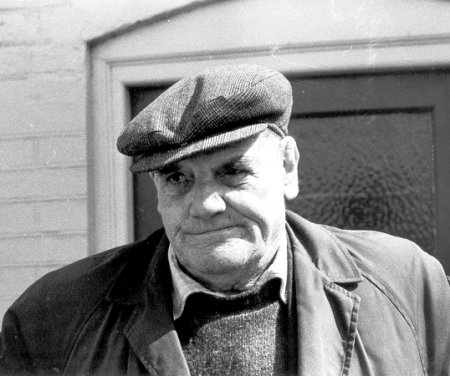 I didn’t have a car at that time so I went by train. I got off at Wickham Market station, which is actually the village of Campsea Ash. It was about a three mile walk to Tunstall and as I was walking to Tunstall I saw signposts for Blaxhall. I’d never known where Blaxhall was. It was so small it didn’t appear on any of the maps I had. When I saw it I thought “Bloody hell, that’s Blaxhall! That’s where those recordings were made.” I went on up to Tunstall and recorded Percy Web for an afternoon. I recorded about half-a-dozen songs off of him and then I said, “Percy, when I came up here I noticed there was a sign for Blaxhall”. I said “Have you ever sung in Blaxhall Ship?” He said, “Oh yes in the old days I used to sing in there quite a lot, boy”.
I said, “Do you know any of the singers there who were recorded in the ’50s?” He said, “Well I knew ‘Wicketts’ Richardson”. I thought “Bloody hell”, because he was recorded on these LPs. But he wasn’t very forthcoming. None of the singers were, really. Of course, you’d gone to see them, not to talk about anyone else!
Then I said to him, “Did you know Cyril Poacher. Is he still alive?” He said, “I don’t know boy, but I’m the only one round round here who still sings the old songs, and occasionally Bob Hart”. Well Bob Hart didn’t mean anything to me in those days, and I thought at first he was confusing him with Bob Scarce. But Bob Scarce would have been in his 90s, if he was still alive so I thought, well it wouldn’t be him. Bob Hart hadn’t become recognised as a local singer at that time. He said, “I did know Cyril but I haven’t seen him for years”. So anyway I leave Percy’s late Saturday afternoon about 5 o’clock and I was going to go back home. So I’m walking back to the station and I thought “No sod it. It’s only two miles to Blaxhall” - I didn’t mind walking in those days - I thought “I’ll go and have a look.” I wandered into Blaxhall just as 6 o’clock was coming round and opening time. There was nobody outside at all. I got in there and had a drink. I used to love a drink in those days.
I was sitting drinking and about 8 o’clock the pub starts to build up and in walks this bloke with an accordion. I’m thinking “What the ...?” Well I’d seen accordion players in Southend. One of my mate’s dads used to play the accordion - a piano accordion. But this bloke who came in had a button accordion. He starts playing and the pub starts to fill up and I’m standing at the bar talking to the barman. Somehow I got chatting with another bloke at the bar who turned out to be Fred Pearce, the melodeon player who played in Blaxhall Ship for the best part of 30 years. I knew the name because he’d been on one of the 78s I’d heard in Cecil Sharp House. I’m thinking “I don’t believe this.” I’m asking him questions and he was a bit deaf too, which meant he shouted when he replied which was just as well because it was getting noisy. I said to him, “Do they ever have singing here any more?” “Oh yeah”, he said, “but not on a Saturday night. They hold it now on a Friday night”. I said, “Well what sort of people sing? Is it the youngsters or ...?” He said, “Oh no, it’s the blokes I grew up with. Cyril Poacher, ‘Wicketts’ Richardson, Geoff Ling”. I said, “What, Cyril Poacher’s still alive?” 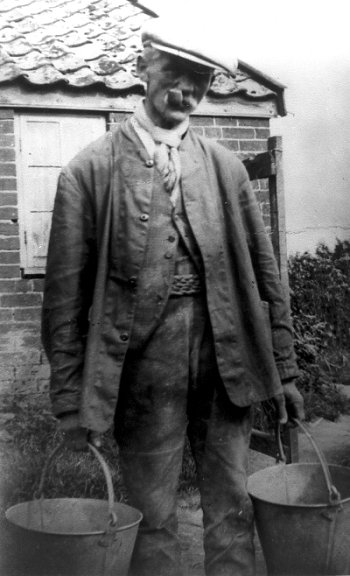 He said, “Yes, he’s sitting over there”. I’m sitting there thinking bloody hell and then as if that weren’t enough I then started, during a break in the music, to talk to the accordion player. I introduced myself and said, “That was great, where are you from?” He said, “I’m from Framlingham, boy”. And again the old brain goes round and I thought, Framlingham, Topic, Child ballads in England, Harry List singing the Light Dragoon. I said to him, “Have you ever heard of a bloke called Harry List?” He said, “That was my father. I’m Fred List and this is my brother Billy.” Then he started playing a step dance tune - Pigeon on the Gate. I’m sitting thinking “Jesus Christ this is all still going on.”
By then it was getting on to about 9 o’clock and I was getting a bit pissed. Because I was so shy I didn’t really go around introducing myself to everyone. I kept a very low profile. I can’t believe they forgot about me; I was so young and left-field to them, so different. They knew I was there, but everyone in the pub was perfectly alright to me. I wasn’t a collector, I didn’t make a big deal about it at all.
One of the real tips if you want to record traditional singers and musicians is to have a subject of conversation other than the music. Mine was football. I didn’t know anything about horse racing. If I had it would have been much, much better, but I did know about football and I did know about fishing. Anything like that just to change the tack so you become a little bit conversationally friendly. You’re not forever saying, “Is that a version of?”, or, “Where did you learn that?”. That can be bloody wearing on anybody, let alone somebody who’s only half interested in talking to you. So anyway I went back to the bar and got chatting with the barman, whose name was John Mitchell - a Scottish guy who was a really nice bloke. He’d been quite friendly to me when the pub was half-empty. We were chatting away and I said to him, “Is there anywhere I can stay around here?”
I had said to Fred Pearce, “You know all these other people, do they get in here regularly?” He said, “Come in tomorrow, Sunday, at 12 o’clock and I guarantee that ‘Wicketts’ and Geoff and Percy will be here. I’ll be here and Cyril” - who was playing the one-arm bandit and I didn’t dare approach - “he’ll be here and you can have a chin-wag with them then”. I thought “This is too good to an opportunity to miss”, so I phoned my parents up and said I was going to stay in Suffolk overnight and I’d come back tomorrow. So I said to John, “Is there anywhere around here I can stay, a little bed-and-breakfast or something?” “Well”, he said, “there’s the youth hostel up the road but you won’t get in there because they want a week’s notice. There’s nowhere else unless you go into Saxmundham”. That was about seven miles away. Then he said, “I run the local school bus and it’s parked out in the car-park. If you want I’ll go and open up for you and you can kip on the back seat over night”. I thought “OK, go-for-it”, it was late summer so it wouldn’t be cold. Though it was bitterly cold! I was so cold I didn’t get much sleep that night and I was well pissed. By the time I left the pub I was rocking and rolling. I slept over and woke up about seven in the morning. With five hours to kill on Sunday morning before the pub opened I wandered around the village about 20 times and eventually the local newsagents and little shop opened up. I bought the one Sunday paper they had and I must have read it from cover to cover about a dozen times.
Eventually the pub did open up at 12 o’clock. So I go in the pub and I’m sitting there and trying desperately to warm-up. John said, “Was everything alright?” I said, “Yes lovely mate”. In walks Fred Pearce again. I said, “Hello Fred”. He nodded. There was this big table, just to the left as you walked in the door, and I sat just to the right of it, hoping that they would all sit around this table if they did turn up. I didn’t expect anyone to turn up but they did. Gradually Geoff Ling came in, ‘Wicketts’ Richardson turned in, who I was gobsmacked to see. Actually he didn’t look all that old, but he was - late 70s. Cyril Poacher came in and Fred introduced me because I’d mentioned his name. Cyril was his normal self, just about managing to grunt “Hello” until he wanted to borrow two bob to play the one-arm bandit, and then he was all sweetness and light. One or two others came in. A bloke called Arthur Drewery who used to give me a lift from Wickham Market station down to the pub. That was good of him. He was a nice bloke. Gordon Keble came in and they were all sitting round this table.
Then, bugger me, in walks Bob Scarce. 88 or something, he could hardly walk, could hardly talk and plonked himself down right in the corner by the door on this big settle round this big table. I’d seen a photo of him in the Folk Song Journal. The photo had probably been taken in the fifties but you could tell immediately it was him. I turned to Fred Pearce and said, “That’s not Bob Scarce is it?” He said, “Yeah that’s Bob Scarce”. Somebody immediately sent a pint over. He was sitting there and I was thinking “God this is unbelievable!” I could not believe it. Because the recordings I’d heard of him were so individualistic and unlike you’ve ever heard any other singer in the world sing like. He sounded a very old man in the fifties. To see him in 1969 still alive was just simply unbelievable. I tried to strike up a conversation with him but it was very difficult; he was very old. But what he did say, and I’ll say this because it doesn’t really matter. I’d said to the general crowd, “You mentioned there was a film made in here?” They all said, “Oh Christ yeah”. “What a waste of time that was. Bloody hell”. The film had been made by Kennedy and Lomax. Apparently, I don’t know if this is true or not, I have no reason to doubt it, it took them 18 days to make this film during which time the pub itself had been absolutely transformed into a recording studio cum film studio. Everybody’s lives had been mercilessly disrupted. ‘Wicketts’ Richardson had cycled all round the neighbourhood to get the best singers there. Cyril Poacher sang the Nutting Girl 17 times. In fact if you ever see the film, he sings the first three verses in one jacket and the last verse in an overcoat!
I mean, don’t get me wrong, it’s a bloody good film and I don’t think it’s very far short of what was going on. It was concocted but it wasn’t a revival, it was a re-enactment of what they would normally do and they picked the best bits out of 18 different days. It’s only a 25 minute film. But during all this Geoff Ling, who was probably the best speaker of the whole lot, said, “The trouble was sonny, when Kennedy and Lomax left - they’d done this film and bollocksed our life up for the best part of three weeks - they said, ‘You lads would be the first ones to see this film when it came out’. We didn’t hear anything for six, seven, eight months maybe even longer. We started to forget all about it. We felt we’d failed, a bit like an audition”. One of the singers there, I can’t remember which one it was now, one of the singers got a letter from his daughter in Australia saying “We’ve seen your film. How wonderful it is. Lovely to see all you singers again”. He showed it to ‘Wicketts’ and all the rest of them and they went absolutely bonkers! Quite rightly so. It wasn’t six months, it was much longer, probably two or three years later. And while we’re sitting round there talking about this, little Bob Scarce, who was pushing 90 at the time, got his bony little hand, banged it on the table and the only words he uttered that made any sense. “If I see Lomax again, I’ll kill him!” This was little Bob Scarce and I’m thinking “What the ...!”
As the two-and-a-half hours of that lunchtime progressed it became apparent to me, and they said, “You want to come on Friday, mate. You don’t want to come on a Saturday, that’s when Fred List plays his melodeon”. They didn’t know that Fred knew all these songs. They knew he sang comic songs like With my Seaweed in my Hand and Somerset Fair, but they didn’t know he sang traditional songs from his father. They said, “Come on a Friday and you might hear some real singing”. Not you will hear, or we’ll put on show for you, just you might hear some real singing. So I did. I went back about three weeks later on a Friday and they had a sing-song. Cyril Poacher grudgingly sang Lamplighting Time in the Valley with his back turned to the entire audience. He sung facing the wall of the pub. I never got to the bottom of that. I think that was because there was a stranger in the midst - and that was me.
They didn’t know I was recording. I recorded surreptitiously on this Sony portable reel to reel with it under the table and the mic on the top of it. It wasn’t obvious, but anybody who saw me would have known that I was recording it. Other people were recording as well in the pub - locals. You know, middle-aged guys. There was one in particular, a man named Ken, who lived in Snape, which was just down the road. And I know that the guy who kept lovely order after ‘Wicketts’ had retired, called Clive Woolnough, who was a youngish guy, probably about 30. I know he recorded some songs in there, I know he recorded Bob Scarce. He became the chairman. After ‘Wicketts’, Clive’s dad did it for a while and then Clive did it.
If they really wanted to make a row over me recording they could have done, because they knew what I was doing. But it wasn’t that rare. I know that Neil Lanham had recorded there about seven or eight years earlier. As far as I know he was the first person to record in there since Kennedy and Lomax. I didn’t know of anybody else, which staggered me, as I assumed that this was all being documented. But it wasn’t. So I made up my mind that Sunday lunchtime. This is too good an opportunity to miss. It was all there. Cyril and others mentioned Worlingworth Swan, Snape Crown, the Plough and Sail, Eel’s Foot, Tunstall Green Man, Glemham Crown, Glemham Lion. And I’m sitting there thinking “You can’t be serious” - and they were serious. “Oh we used to sing there, and in Framlingham we used to sing at this pub - Jimmy Finbow’s”. So I decided there and then to go and record what was there. Not to document the songs and find out their provenance and their background, but to go and record the singers and musicians that were still alive.
Now coincidentally exactly at that time Topic Records, and Tony Engle in particular, who I knew from having seen him in the folk club with Oak, who I loved. That’s how I first got to know Peta and we later became partners. At that time Tony was kicking Topic off as a major label, going from issuing one traditional LP every three years to six a month. It was a phenomenal period the early seventies. And it was all fabulous stuff and coincidentally just at the time I’m getting involved in all this. Also coincidentally a girl called Ginette Dunn - who was a New Zealand girl - came over and she was at Leeds University, working with Tony Green, I believe - had been given the project of researching East Anglian traditional singing styles. She plonked herself into Blaxhall Ship probably about a year after I started. She was on ‘whatsit’ from Auckland University. She was a nice girl, Ginette. Very quiet. She was even more shy than I was. Ginette had more problems than I did because she was quite an attractive girl and some of the wives of some of the local singers started to feel a bit jealous. Even in those days - the 1970s - women in pubs were not the norm. Plus some of these singers were rather randy old men and they would chat her up something rotten. Fortunately she handled that quite well. So I carried on doing this. I had probably recorded for two years in Blaxhall Ship. I would say I went up two times every three months, on average. Loads of times I went and didn’t record. I’d got to a point where I was recording the same songs over and over again. I’d come to the bottom of the well of the local traditional singers. I’d always take the recorder with me but I didn’t often record. I was just generally treated as one of the locals. Because I had actually become not a local, but not so much of an outsider. A recognised face. They knew that I wasn’t there to rip them off.
I once asked Cyril Poacher many years later, “As you know, you’ve had your troubles in the past with people collecting. Why were you all so generous to me?” He said, “Because we felt so sorry for you boy. You didn’t have a car. You walked around. You carried all your gear with you. You weren’t a pain in the arse and we just felt sorry for you.” I thought “That’s alright.” I had proved I was not there to rip them off. If they needed an extra for the darts team I would make it up. So after about three or four months I became less of a novelty.
One of the bonuses was I could get a train from Southend on a Friday afternoon and be in Wickham Market station at half-past six. Very often this guy called Arthur Drewery - who was his early 70s. He was a local man and well liked. He’d be waiting in the car park just to see if I was on the train. He was on his way to Blaxhall Ship and if I didn’t arrive he went anyway. If I turned up with him, people who didn’t know who I was would think “He must be all right, he’s with Arthur.”
They didn’t put a show on for me, it was the same whether I was there or not. I wasn’t a major player in the evening’s events. I let them get on with it. They invited me to sing and didn’t believe it when I said I didn’t have any songs and I can’t sing. Occasionally that wasn’t good enough and they would have a bit of a pop at me. Not anything heavy. They didn’t expect me to pay for a gallon of beer or anything like that. But they did ask me to sing. On one occasion, when Jack was selling the pub, Cyril said to me, “You ought to buy this pub”, he said, “because you would keep the singing going”. Which I thought was a nice thing for him to say. I thought a lot of that.
I had three major disadvantages when I started. One was incredible shyness, secondly I had no transport and thirdly I didn’t really have a decent enough tape recorder to do it for Topic. I was gobsmacked when I found that nobody was recording it. I said, “Who is documenting all this?” They said, “What do you mean documenting?” I said, “Is anyone recording you? Is anyone taking down all these anecdotes and stories?” There may have been a local history society but living people are not the stuff of local history societies, because they can be awkward, argumentative, cantankerous. Who wants to deal with them when you can go back and refer to things that happened hundreds of years ago? I mean you look at people now in their 70s - they’re only 15 years older than I am now, but they’re not the likes of Cyril Poacher. I mean those guys were a different breed. Cyril Poacher or Charlie Whiting would argue the toss with you until the cows came home. People wouldn’t do that now. And if that didn’t work they would take you outside and give you a whack and you would expect it as well. Too bloody right. Jimmy Knights, who was five foot one and approaching 100, was not the sort of bloke you would want to get into an argument with. He wouldn’t destroy you physically but he would have you in pieces. They were lovely people but they weren’t soft. I couldn’t stand this country, cosy, village character, good old boy, what a lovely old man mentality. That held no interest for me at all. I liked the awkward difficult bastards like Cyril Poacher and Bob Scarce and several others who were ten times worse than either of them. ‘Spanker’ Austin - if you ever met him - bloody hell - fiddle player from Woodbridge. Bloody hell, the stories I could tell you about him. The sort of people they are come out in their songs and their music.
In the ’20s Blaxhall ship went through a stage where it didn’t have - this is in the late ’20s - it didn’t have a melodeon player because there wasn’t one good enough to play. So they imported from Wickham Market and Woodbridge these two fiddle players, Eley Went and ‘Spanker’ Austin - Arthur Austin - who used play together. They were both born around the turn of century so round about this time they would have been late 20s/early 30s. They cycled from where they were living. Woodbridge and Wickham Market were two towns near to Blaxhall and for some reason both of them had a tradition of string band music. They were small country towns as opposed to small villages, so they would have these dances, the Palais glide, the Lancers and the Waltz, and they would play in these string bands. They also played in the church in a quartet with another fiddle player and a cello player. They went to Blaxhall ship and they could play anything, so they played step dance music for the Smiths. They loved them, the Smiths, they loved these fiddle players. Cyril, Cyril Poacher, had managed somehow to keep in touch - and we’re talking 40 years later - with Eley Went and gave me his address in Ipswich. So I wrote to Eley Went and went round and visited him. 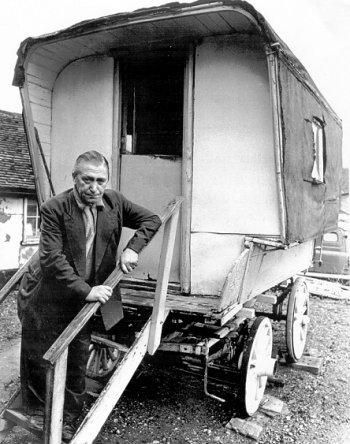 The most remarkable fiddle player I’ve ever heard, he really was. He’d played in dance bands. He was a bit like Walter Bulwer, he could do all of that. He knew where the notes were. He died unfortunately just after I went to see him - my one and only recording session - but he said to me, “Oh yeah I used to go around with ‘Spanker’ and we’d go to this and that and we’d go to Blaxhall Ship.” I said, “Would ‘Spanker’ Austin still be alive?” He said, “He is boy. He lives in a caravan in the car park of Woodbridge railway station.”
Now I must have seen that caravan a hundred times from the train as I went up, so I thought “Great.” A couple of weeks later I went down to Woodbridge and went to the caravan, but he wasn’t there. It was afternoon and I waited for the pub opposite to open up. I wandered in there to have a couple of beers and I went up to the bar and said to the landlady, “Have you ever heard of a bloke round here called ‘Spanker’ Austin?” She said, “About time too! About bloody time and all!” There’s me thinking “They know this guy, he’s a genius and at last somebody’s come round to record him.” “Look, look” she said, “look up in the ceiling.” So I looked up and there was this bloody great hole. I said, “What’s that?” She said, “Well that’s where he came in the other night with a double-barrelled shotgun, fired it into the ceiling, and walked out again.” She said, “You are the police aren’t you?” I said, “No.” She said, “Because we phoned the police and they said they’d send somebody round. This was best part of a week ago. We thought you were the police.” I said, “No I just want to meet the guy and talk to him.” She said, “He lives over there in that caravan.” I said, “He’s not in there at the moment.” She said, “He’s probably either dead drunk on the floor of the caravan, underneath the caravan dead drunk, or dead drunk in another pub in Woodbridge!” She was a very, very irate landlady and I left it at that. I later went back one Saturday afternoon and recorded him. He still had his little old violin under the bed. He hadn’t played for years and years. He was very pleased I was interested, but he was hard work because he was old and he’d lived a very, very rough life. There really wasn’t room for two of us and a tape recorder in his van. He was something else. There were countless stories about him. Legendary stories about him and Jimmy Knights, people like that.
So anyway in 1974, I’m pretty sure it was ’74, I was talking to Tony Engle saying, “This was all wonderful stuff”. He’d just put out the Bob Cann and the East Anglian country music one with Oscar Woods on it. Now I didn’t know Oscar Woods at that time, until the record came out. I knew him very well after that. This was all happening in very short space of time. So round about this time I said to Tony, “By the way, you’re doing all this wonderful stuff. Have you ever heard of Cyril Poacher?” He said, “Of course I have. He’s on the Folksongs of Britain Topic series”. I said, “You know he’s still alive and singing?” He said, “No”. I said, “Yes, I know him quite well”. He said, “Well can you set up a recording date and I will come up and record him”. So I did. He and Peta came up one Sunday morning. I met them at Ipswich station and they drove up to Cyril’s farm cottage in Blaxhall. I’d organised it all with Cyril and we recorded about 12 songs. Then we went back two or three weeks later and recorded another five or six to make up an LP. That was The Broomfield Wager. Tony did the bulk of the recording; I didn’t have the equipment. He did it all professionally. Cyril handled it perfectly well. He was a real professional, Cyril. Of course, they don’t take up singing and learning old songs to keep them secret. Why would you do that? One or two might say, “I’m not so sure, no, this is my family tradition”. One or two maybe, but 98 per cent of the singers were highly delighted and would organise a session for you so that they could be recorded. Totally against the grain of what you’ve read in the past and had fed to you - that these songs had to be coaxed out of people and you had to see them a dozen times before they would sing for you. There’s me, 21 years-old with hair down to my shoulders, drinking alongside them and having a good time and not knowing jack shit about the songs they’re singing but knowing this is a good singer. So we recorded Cyril and we put the LP out a short while afterwards and that seemed to go down all right.
Then I discovered ‘Jumbo’ Brightwell in Leiston which was another major shock for me. I’d thought ‘Jumbo’ Brightwell - he must be dead years beforehand, but he was still alive. Manfred Mann took me to see him. The Manfred Mann. He used to live in Westleton, a little village about four miles from Leiston. I was hitch-hiking, trying to get back to watch Southend play on the Saturday. I had got a lift and the car radio said the game was cancelled due to waterlogged pitch. So I said to the bloke, “I don’t have to go back to Southend now. Drop us off at the next roundabout and I’ll go back to Suffolk”. The first person who picked me up was Manfred Mann. He said, “What are you doing up here?” I told him and he wasn’t interested in the slightest. I said to him, “Where are you going then?” He said, “I live in Westleton but I’m going to Leiston.” I said, “Oh Leiston. Have you ever heard of a bloke called ‘Jumbo’ Brightwell?” He said, “I don’t know if his name’s Brightwell but I know a bloke called ‘Jumbo’.” So he dropped me outside ‘Jumbo’ Brightwell’s house. I bang on the door. He invites me in and sings 10 songs for me. Outside in the garden in the shadow of Leiston gas works. The first song he sung was the False Hearted Knight and my batteries run out on the tape recorder. So I go home and replay it on Colchester railway station and it sounds like Mickey Mouse because it had warmed up a little bit. I was thinking what the bloody hell’s happened here? Then I realised the batteries had run out. So I get on the phone on the Monday to speak to Tony. “By the way,” I said, “I’ve found ‘Jumbo’ Brightwell.” He said, “You’re joking.” I said, “No.” So he said, “Well set it up and we’ll come up and see him.” So I did that. He came up and recorded, again in two sessions, he did one, then I did one on my own. Enough for an LP. Then I took a week off to go on holiday. I remember thinking “This is great.” I went to Framlingham - to the the Hare and Hounds - and I remember phoning Tony up because I’d found this old boy who sung Female Cabin Boy and another old boy who sang Caroline and her Young Sailor Bold within the space of a lunchtime drinking in this pub.
I phoned Tony up, a little bit pissed in the afternoon, and told him I’d found this bloke and that bloke. “This is all good stuff”, he said, “but I can’t keep coming up. I’ve got other things to do. But what I will do, next time you’re up in London, if you want, I will lend you a Uher tape recorder and you can go and do it yourself professionally.” My immediate reaction was “Christ I’ll never get it to work.” I’m not technical at all. I’m an accountant not a sound engineer. But he ran through it for about an hour and then he said, “What do you think of that?” I said, “I’ll give it my best shot.”
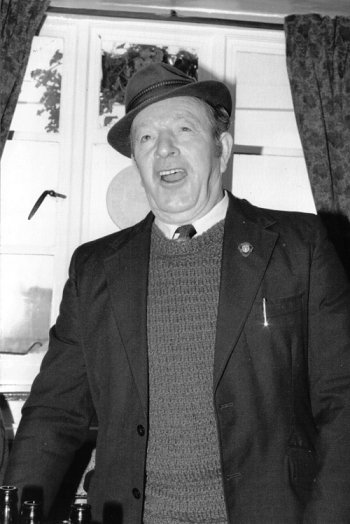 So I used to hitch-hike all round Suffolk with the Uher under my arm and a microphone stand that he gave me. To begin with just one microphone then stereo microphones. And I went and recorded all these people. The first person I recorded on it was Fred List, singing and playing the accordion. Some of the best accordion / melodeon playing I’ve ever heard. Then the next day I recorded Fred Pearce, although he had officially retired as the Blaxhall musician some seven or eight years earlier. He recorded loads of old tunes for us on the Sunday. Then I went and interviewed, with Ginette, Cyril and Geoff Ling and recorded Geoff Ling’s five songs, which were issued later. So it went on. I recorded and recorded and gradually, coming back to Blaxhall, I felt all the good songs that I would want to be captured on a disc had been recorded by me or somebody else. Cyril had a limited repertoire of about 20 songs and they had all been recorded and recorded properly by Topic. The same with Geoff Ling. I didn’t record music hall songs or parodies of songs or First World War songs. They weren’t the sort of songs they would have immediately sung for me. Geoff would have gone for one of his mother’s songs or one of his grandfather’s songs. Geoff Ling was a good example of this. Depending who was asking for the song, if it was someone like me he’d go for Died For Love or Green Bushes, but equally he was just as at home with Suvla Bay or Big Wheel, but he didn’t see those as important songs. Cyril didn’t see Running Up and Down the Stairs as important. It was just something he threw in at the right moment.
We’d recorded Cyril, Cyril Poacher. I’d recorded Geoff Ling. I didn’t record Percy Ling until much much later. I can’t remember why. I felt that I had mined all the best songs out of Blaxhall. We’d got the best of Cyril, we’d got the best of Geoff. We’d got the best of several others. The singing was starting to ... not decline; people were dying! Fred Pearce died, Bob Scarce died, I found Geoff Ling’s brother in Croydon, George Ling, and recorded all his songs. The singing wasn’t dying out so much as going down a little bit and a little bit. It wasn’t happening every Friday. The other thing was the people were being moved out of Blaxhall as they got older, to Snape. In one road in Snape, which was the next village down, lived Dick Woolnough, who was a great stepdancer and singer, Percy Ling, Bob Hart, and somebody else. All in one road in Snape.
It wasn’t sheltered accommodation but similar. Alf Richardson - ‘Wicketts’ - had moved to Aldeburgh to an old people’s residential home. So he was out of the frame. And nobody was taking these blokes’ place. So you could very often go to Blaxhall and there’d only be Cyril and Geoff in the company. Maybe Percy Ling would turn up. The Ipswich folk club would occasionally turn up. The dynamics of that were different. Some of them were alright, some were quite good. The folk people would keep it to once every two months or so. It was a special occasion. I might be wrong here but they wouldn’t just turn up as I was doing on a Friday night. If the young revivalists turned up they would normally turn up en-masse for a night’s entertainment and that’s how the locals saw it. They weren’t anti it by any means. They weren’t over excited by it, but it was keeping it going and taking a bit of pressure off them.
Then you got the situation with the drink driving regulations which were tightened up in the mid seventies. People like Fred List, who drove a considerable distance from Framlingham to Blaxhall. That’s a good 20 to 25 miles, wouldn’t risk it anymore. So you’ve lost your local musician. You got Oscar Woods who was then invited down. They were all paid. Fred Pearce stopped playing not because he wanted to stop but because he fell out with the landlord. He hadn’t done it one week and they booked somebody else, not as good as him, and paid him more. Fred found out and said, “Sod you then, I’m not playing here anymore” and didn’t. He played once in the six or seven years that I was there. He only played one tune, just to keep the game alive, really. Fred List had knocked it on the head so they eventually got Oscar Woods, who was probably the best of the whole lot.
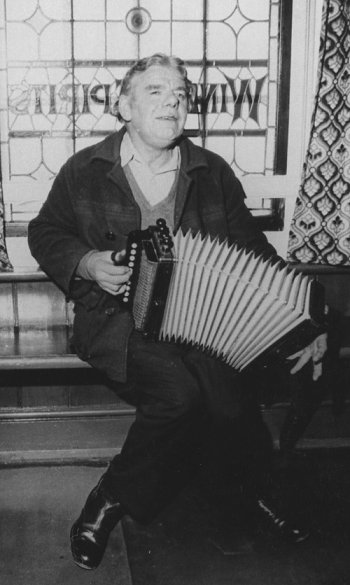 He lived nearer in Saxmundham but he didn’t have transport. He was reliant on other people. Oscar taught me to drive. He didn’t do that so that he could help me out. He wanted a chauffeur. So I used to pick him up in Benhall where he lived, next to Saxmundham, and drive us both to the Blaxhall Ship. But I was only going up there once or twice every two months so he was reliant on other people. On more than one occasion we had to walk back from Blaxhall Ship to his house in Benhall, which was a bloody long walk - a good seven miles. I was knackered and unhappy about that on more than one occasion, because Oscar had forgotten to book a taxi. But he was a lovely man, Oscar, he was one of the sort of blokes you don’t meet everyday. There was something about him and I don’t know what it was. I’ve never seen it described properly but he was different to everybody else. He was so laid-back and such a thoroughly nice bloke. It wasn’t until I started doing these tapes and putting things together that I realised what an influence he was on me.
He found people for me. One example is I recorded a singer called George Doy. Me and Oscar had been in the Fresh - the railway refreshment rooms in Saxmundham - which was his local really. It wasn’t really a pub so much as a converted caff. He would play in there on Saturday lunchtimes just for a tune up and one or two other people would wander in. It was a nice place because everyone knew what they were going to get. You didn’t get a lot of outsiders in either. He was playing in there one lunchtime. The pub closes at half past two and he doesn’t want to go back home because by the time he’s got back home - I didn’t have my car with me - it’s time to come out again. First we went to the cafe over the road and had a little meal there. Then we went to the bookies and spent an hour in there. We still had an hour and a half to waste before the pub opened again. So he’s scratching his head in the bookies, and that’s about to close because the last race is at four. He looks at me and says, “You do know George Doy, don’t you boy? George Doy who used to sing in the Eel’s Foot.” I said, “No I have never heard the name.” Now I’d known Oscar for about four years by then and he said, “Oh. Well let’s go round and see him.”
So we trundle about a quarter mile up a road in Saxmundham, Saturday afternoon, and knock on this bloke’s door. His daughter answers the door, she’s probably in her late 40s/early 50s, and Oscar says, “Hello Marge, how’s tricks?” She says, “Hello Oscar, what do you want?” He says, “Let me just introduce this dear boy here, he’s Keith Summers, he’s recording old songs. How about George, would he like to record some old songs?” “Oh he’d love to, dear boy. All he’s doing is sitting and watching telly. He’d love to talk about the old days.” So we both wander in to his living room. I set up the recorder and his daughter gives him this great big spiel, you know, big build up. “This is my dad. He used to sing in Eel’s Foot Inn in the ’50s and in the ’40s. He knows a hundred old songs.” She went on and on and on. Then she said, “Right, over to you Dad.” And he sat there for what seemed like half an hour in total quiet, but was probably about three or four minutes. Me and Oscar were getting more and more ... we didn’t know what to do or say, and his daughter was looking embarrassed. He was just sitting there and then he starts, “It’s of a rich merchant in London did dwell.” and we all went “Phew!” It was lovely. He sang two songs, the Dark Eyed Sailor and Flower of London. Both Eel’s Foot songs. He was well into his 90s, so we didn’t press him. By which time it was time to go back to the pub. So we did. We went back to the pub. He’d done his bit, he was over the moon. I got the two recordings and they’re very good. I’m going to include one of them, the Flower of London, on this double CD.
But coming back to Oscar. Oscar was very helpful in a lot of things, which I didn’t realise at the time. If I’d made enemies. Made an enemy of Oscar - although it was almost impossible to do it - or Cyril, I’d have got nowhere, sharp! The only reason that I got recordings of Charlie Whiting in the event was Fred List gave him a right bollocking, a few days after Charlie had given me hard time in the pub. He later told me, Fred List, that the whole village, the whole pub, thought that was very poor of Charlie and well out of order and they told him so. So suddenly Charlie becomes my top man. He didn’t want to upset me or the rest of the village.
So pretty well that’s it. I kept that going up until about 1978 when I got this job in Fermanagh. In 1980 I started going out with Peta. The time wasn’t there and the singers had all died. It wasn’t the same when I came back from Ireland and I probably did my last recording in Suffolk in about 1979.
The following is taken from Earl Soham Slog LP sleeve, written in 1978, and also in Keith’s own words:
The traditional folk music of East Suffolk has probably been the best documented regional style in England over the past thirty years. Whereas much of the music and singing recorded in this period would appear to be indigenous to a general ‘East Anglian style’, it is possible, even within such a relatively small area, to detect various distinctive traditions - often revolving around either a particular pub, village or influential musician. Basically during this period, there were four such quite separate local groupings in this area, with of course some interaction between them (primarily in the case of the travelling pub musician). The best known of these was undoubtedly that centred around the singing pubs along the Aldeburgh coastal district, such as Blaxhall ‘Ship’ and the ‘Eel’s Foot Inn’ at Eastbridge. Here the music and singing was highly organised, generally as a Saturday night’s entertainment with chairmen introducing the singers and maintaining order. Secondly, the nearby towns of Woodbridge and Wickham Market boasted a fair number of dance and string bands led by men such as Walter Clow, Fred Went, Billy Hall and Lennie Pearce. A third tradition was active around the pubs in Halesworth and Yoxford area, revolving around the charismatic Seaman Family from Darsham. Finally, the small villages between Framlingham and Debenham sported a great musical tradition dominated by melodeon players Walter Read and Alf Peachey and fiddlers Walter Guyford and Harkie Nesling.
Postscript
Musical Traditions Internet Magazine republished Keith’s Sing, Say or Pay! article in 1999. You can read all the people from these CDs (plus a great many more) talking about the singing and music traditions in the East Suffolk area. It’s all there at: www.mustrad.org.uk/ssp/ssp_ndx.htm
At the time of republishing, we asked him to update it where necessary and add a new Introduction. He also added a postscript - which concluded as follows:
I must be honest and admit that it is at least ten years since I last read this article and and I don't mind telling you that I have thoroughly enjoyed reading it again. A great many happy memories and not a few profound disappointments have been relived. But the over-riding emotion is one of great good fortune to have met, in such a short period, so many thoroughly genuine, fascinating and talented people. Whether it was men with a knowledge of their tradition far beyond their immediate community like Cyril and Jumbo, well-travelled and fantastic raconteurs like Harkie, Pip or Geoff Ling, in the genial good company of Dolly or Oscar, or in the proud families of Seamo, Peachey or Walter Read, or simply an elderly woman with a shopping bag who just wandered into a pub for a sit-down while waiting for a bus and enthralled me with stories of Walter Clow and Billy Hall - they all had a story to tell. I would like to think that I did my best to tell it.
Alec Bloomfield came from a singing family; his cousin was Fred List and his father, George Bloomfield, was the source of many of his songs. Alec lived in Westleton, then Benhall and then moved away to Nottingham, which is where Keith recorded him. He was a tall man who despite working as a gamekeeper was extremely popular: “Not many poached on me those days 'cos I used to go out netting rabbits with the fishing lads when the herrings weren't coming in - but no-one ever touched my pheasants, even when times were really hard.”
Alec became a favourite singer at the famous singing pub the Eel's Foot at Eastbridge, along with chairman Philip Lumpkin, the Brightwells and the Cooks. In 1939 he was recorded by the BBC and in the 1950s Peter Kennedy recorded both Alec and his father George again for the BBC. In fact, because of Alec’s vast knowledge of local singing pubs and the singers that visited them, he became a scout for Kennedy, and it was Alec who took him for the first time to Blaxhall Ship.
William 'Jumbo' Brightwell was born in 1900 in Little Glemham, one of eleven children. It was there he met an old sailor called Jumbo Poacher from whom he got his nickname. His first job was as a bird scarer, then after the First World War he returned to Leiston where he worked as a bricklayer's labourer, and then started at Garrett's engineering works where he served twenty years as a shunter, like his father, before retirement.
Ted Cobbin was born in 1906 in Parham but spent most of his life in Great Glemham. The family originally lived at the timber yard which was opposite the village pub, the Crown. Ted's working life was spent as a general stockman on Lord Cranbrooke's estate at Great Glemham where he tended the pigs, cows and sheep. Then in later years he looked after the horses, a job he continued with even after retirement. He was thought of very highly on the estate and when he died in 1975 they named a barn - Cobbin's Barn' - after him.
Ted Cobbin played melodeon with Peter Plant in Great Glemham Crown and sang several songs, sometimes accompanied by Peter. He rarely played anywhere else.
Cecil Fisk was born in 1920 in Bedingfield, where his family ran a building firm. When the Second World War broke out he was not called up, as building was a reserved trade, but in 1939 he volunteered, aged 19, for military service. His army career was an eventful one which included travel to Nigeria and Sierra Leone, seeing action in Egypt. While in Libya he was captured and spent 2 years in an Italian prisoner-of-war camp before he and a friend escaped, crossing the Alps into Switzerland.
Locally, Cecil was best known for playing the drums, which accounts for his strict timing with a dancing doll. He mostly played in Southolt Plough with piano player Eddie Stevenson, but also played in Brundish Crown, Dennington Bell and Worlingworth Swan with other local musicians.
Jimmy Knights was born in 1880 in the same house in Debach where his father and grandfather had been born. When the First World War erupted he spent four years in France. Returning unscathed, he travelled the country, particularly Scotland and Yorkshire, as a stallion leader, a job he did for twenty years.
Jimmy played a banjo which he had bought in Hull during his travels. He had learned to play fiddle a bit as a boy and then found he could knock out local tunes he knew on the banjo, like Jack's the Lad, Devil and the Tailors, but it was his songs he was best known for. He sang in many of his local pubs like Bredfield Castle, Clopton Crown, Charsfield Horseshoes and Hasketon Turkey (Turk's Head) and said that he had first visited a pub when he was ten. He met and heard a lot of the older singers and it was from them he gathered his large and unusual repertoire of songs: “Well, every bugger used to sing those round here - I used to, but I prefer to sing something different - something people haven't heard before.”
Geoff Ling was born in 1916 into one of the best known singing families in Blaxhall. His grandfather Aaron, mother Susan and father Oscar were singers and his older brother, George became known as 'a rare old singer'. Geoff's dad worked at Stone Farm as a horseman where Geoff worked alongside him for some time before working on other local farms. During the Second World War he served in the army and spent several years in a Japanese prisoner-of-war-camp.
It is sad to say that over the years the number of songs available for Geoff to sing has steadily increased, as the old singers died and he became the last carrier of Blaxhall's singing tradition. He now lives in retirement in Saxmundham.
George Ling who was known as ‘Spider’ was born in Blaxhall in 1904 and was the elder brother of Geoff Ling. His grandfather Aaron, mother Susan and father Oscar were singers and everyone in the family had a go at stepping.
George's first job was with his mother stone-picking in the fields, then at twelve he went to work with a dairy herd, then went to work at Snape mailings, where he did a bricklaying apprenticeship, with singer Bob Hart as his labourer.
He moved to Croydon in 1926, and did play melodeon and sing in some of the back street pubs, although when he returned to Blaxhall on holiday he still took his place as one of the senior singers there, always remembering his early days.
Percy Ling moved to Snape in about 1930. He came from Tunstall originally, but moved when he got a job at the Maltings. Bob Hart would be on the barge weighing the malt and Percy would carry it up to the truck. “We used to do a lot of singing in Snape - all those pubs - the Key, the Crown and the Plough and Sail, and the Blaxhall crowd came down the lot. That's where you'd learn your songs, and I knew some from my grandfather, Cronie Ling. Some nights we'd get in Iken Hut, about 70 of us, and the gypsy boys would take turns serving behind a little bar. Sometimes the policeman would come in about two in the morning. Well, if he saw a pint he'd have it - they didn't mind.
Oh, we used to go anywhere for a song. Often a gang of us would cycle to Framlingham just for a night out. That's all we had then - no radio or TV. Sometimes my wife would come - she played the accordeon lovely. Now all they seem to want to hear is country and western - both my boys play that in the pubs. One Saturday night we got a bus from Tunstall to Snape - they had a fair here and they had contest, singing for a copper kettle. I sang Group of Young Squaddies. Well, I tied with another chap - they went by the crowd and we had to sing again; so I gave them Little Sweetheart in the Spring - I got it!”
Billy List (William Pearl List) was born at World's End Farm, Saxtead, in 1909 and was brother to singer and melodeon player Fred List and son of singer Harry List. Billy lived in Brundish and was remembered well by Charlie Whiting's nephew, Lenny Whiting: “Billy was a universal chap; he drove a steam engine, a steam road roller, and he drove one of those big old chain bucket cranes. He'd work round here or he'd have to go away to work for maybe two or three months and he'd work a sugar beet team. My old man and me used to meet up with Billy and his lad and we'd go rabbiting, that was when the hedges were twenty foot wide. That was Saturday and Sunday regular - well it was bit of extra spending money. They'd take them to the pub at night and raffle them off. I did hear him sing, but not a lot, because he was a Blaxhall Ship man - well in the later part of the time - because Fred List played accordeon there.”
Fred List (Frederick John List) was born at World's End Farm, Saxtead, in 1911 and was brother to Billy List. He sang lots of songs with many coming from his father, Harry List, who was recorded by Peter Kennedy for the BBC in 1951.
He learned to play melodeon as a young teenager, teamed up with George Scott, and started playing around the pubs - Framlingham Railway was their regular Saturday night spot. In later days Fred became the house musician at Blaxhall Ship and was featured on the 1974 Transatlantic LP The Larks they Sang Melodious. Fred died in 1994.
Harkie Nesling (Harcourt Nesling) was born in 1890 in Bedfield although his father's family were from Westleton. In 1910 Harkie moved to London for a short period to work as a wheelwright, and at night played in a pit orchestra for the silent movies, before an accident at work forced him to move back to Suffolk, where he married.
His first instrument was a concertina, then a 5-string banjo and a mandolin. He didn't get on the violin ‘til he was about 14. After the Great War, Harkie reunited with fiddle player Walter Gyford and melodeon player Walter Read to form a country dance band. They played for weddings and village hops, in pubs such as Monk Soham Elm and Bedfield Crown, and rather intriguingly played every Thursday (pension day) at Bedfield Post Office.
In later years Harkie teamed up with fellow fiddle enthusiast Fred Whiting, and Harkie died in 1978. As Keith summed him up: ‘Wheelwright, barber, carpenter, wart-charmer and local musician all his life!’
Fred Pearce was born in Eyke in 1912, and didn't move to Blaxhall till 1938. He didn't start on the accordeon ‘til he was 24, though he played mouthorgan as a child. “No-one taught me - I just picked it up.”
There were several good accordeon players at Blaxhall, but as time went on Fred established himself as the regular musician in The Ship, playing for singing (his repertoire included many traditional songs), stepping and polkas, known locally as “froggin’ rounds”.
Cyril Poacher was born at Stone Common, near Blaxhall, Suffolk, in 1910, to Alice (née Ling) and Lewis Poacher of Blaxhall. Like his father, he was a cowman almost all his life. He married, joined the army and was stationed at Catterick Camp during Second World War, before returning to Blaxhall in 1946, to work at Grove Farm, where he remained until he retired in 1975. In the early ‘70s, he moved to live in nearby Snape with his wife.
He learned songs as a child by listening to his grandfather, William ‘Cronie’ Ling, and his grandfather’s brothers, Aaron and Aldeman, and he began singing at eight years old. He first sang in public in Blaxhall Ship at the age of about nineteen. He also learned songs from other local singers there, many being of his father’s and grandfather’s generations.
Reg Reeder’s dulcimer has been in the family for about 100 years. A Mr Howard from Halesworth made it and Reg’s grandfather told him that Howard claimed to be the world champion dulcimer player.
His great-grandfather James Philpott he had a larger one, but he played a lot for parties and so he decided to get a smaller one, so it wouldn't be such a job carting it round. He swapped his with Mr Howard for this smaller one and a pair of boots. Grandfather Charlie Philpott told Reg that he first started to learn to play from his father when he was three: “He was an only child so I supposed he got a lot of attention, and he was left-handed which maybe helped him to rattle the tunes out because, my God, he did rattle them out.”
Bob Scarce (Alex Scarce) was born on 8 June 1885 in Blaxhall but lived for 25 years in Snape between the War years. Until his death in 1974 he was the oldest man living in Blaxhall who had been born there.
Although Keith Summers had met and spoken to Bob on his first night in The Ship, it was to be several months and three or four more visits before he heard him sing. He considered Bob Scarce to have been one of England's greatest traditional singers. His style was hugely idiosyncratic, immediately recognisable, and yet firmly within the declamatory Blaxhall tradition, and he had a repertoire of magnificent songs and striking ballads.
Albert Smith was born in Butley in 1914 He was a forestry worker and when he married he moved to Chillesford and lived there until he died in 1982. His cottage was small but had a large kitchen garden of which he was very proud. He was said to have fed the whole village with vegetables.
Albert's local pub was the Butley Oyster where singers like Ciss Ellis, Crump Snowden and Percy Webb sang regularly. He played mouthorgan and Jews harp as well as reciting comic 'ditties' to amuse the crowd and was often called upon to play Pigeon on the Gate for stepdancing.
Font Watling (Walter Whatling) was born in 1919 in the village where he lived all his life, Worlingworth. He worked as a driver and was one of the first in the area to have a car. Font was a true countryman and was an active member of the Dennington Pony and Trap Club, taking a cup at the Suffolk Show in 1974.
His first instrument was the concertina and he also liked to play the drums, but it was the melodeon that he became known for. His interest was first aroused when he first met Walter Read, the blind shoemaker from Bedfield, who was probably the best melodeon player in the locality. Font would take Walter in his car to remote rural pubs where they would play together.
Font's prowess as a stepdancer was well known and he won competions at Ubbeston Wheatsheaf and Badingham Bowling Green. His party piece was to step and play at the same time, which always brought the house down. One of his life-long friends was Wattie Wright with whom he would step in unision, arm in arm. In the 1950s Font formed a band with Wattie on drums and Eddie Woolnough on second melodeon.
Fred Eley Went (Eley Frederick William Went) was born in Ipswich in 1900, but the family moved to Ufford when Fred was seven. He was a self-taught fiddler, although he did take lessons from a violinist from St Audrey's Hospital in Melton which gave him the rudiments of music, but as these recordings show that didn't stop him becoming a remarkably creative fiddle player.
In 1917 he went into the army and kept up his musical life by playing in a fife and drum band. After seeing action in France he returned home and started playing in local pubs, like Wickham Market Vine and Volunteer, Blaxhall Ship, Snape Plough, Easton White Horse and Woodbndge Cherry Tree. This was usually with a group of mates, particularly fiddler Spanker Austin and melodeon player Reuben Kerridge. They also played for servants' balls and in church. Around the Hacheston area he teamed up with another fiddle player, blacksmith Walter Clow, sometimes with Fred playing banjo and mouthorgan together.
In his later days he played regularly in Bramford Cock alongside musicians like David Nuttall who always remembered him being known as ‘Fiddler’ Went and there doing what he did best - improvising.
Eley Went died suddenly in 1976 but is still well remembered around Woodbridge and Blaxhall. As many people still say, “Eley Went and thar he goo”.
Charlie Whiting was born in 1905 in quite a grand farmhouse called The Homestead in Southolt, which was owned by his father, James Whiting, who was known as 'Dimmer'. When his father died, Charlie sold it and bought a little cottage on the green at Southolt opposite the Plough, where he lived until his death in 1984.
Charlie worked for his brother Jim, who had a two-horse farm called Trust Farm in Wilby. His brother spent his days out dealing with his horse and cart, while Charlie did the drilling and ploughing with the horses and looked after the few cattle and bullocks they had. In the 1950s he bought a paper round and ran this for 10 to 15 years. On retirement he did odd jobs, dug graves in Southolt church yard and was churchwarden there.
The Whiting family loved to perform (Charlie and Fred Whiting’s grandfathers were brothers). Charlie's brother Tony was known as a brilliant singer and Charlie himself was a good melodeon player until he lost some fingers in an accident. Southolt Plough was a lively pub, with people coming for miles on a Saturday and Charlie would have been amongst them all night, singing and telling tales, just as he did in Dennington Bell and Brundish Crown. But it was stepdancing that the Whitings became best known for and Charlie won competitions held at Ubbeston Wheatsheaf and at Badingham on the back of a wagon.
Charlie was such a lively character that he was given one of the main roles in 1974 film Akenfield.
Fred ‘Pip’ Whiting was born in Kenton near Debenham in 1905 and lived there for most of his life. His father John wasn't a musician but he knew a lot of songs, and it was he taught Fred his first song.
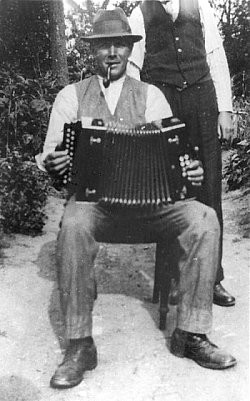 Fred found it increasingly difficult to find work locally as a drover of sheep and in his late teens he decided to look for work in Australia and South Africa. He was also a prolific song collector, and over the years he picked up songs and tunes wherever he went.
Fred was not only an extraordinary singer, he also played fiddle left-handed. He actually had it strung normally, so he played it upside down. He also made and played dancing dolls which always pleased the gathering. After his youthful travels he returned to Kenton, the village of his birth, where he died in 1988.
Oscar Woods was born in Friston, but when he was five the family moved to Sternfield, just outside Saxmundham. Just around the corner lived an old farm worker called Tiger Smith and in the summer evenings he often played an old wind-up gramophone in his back yard, or else he played a little button melodeon. The sound of that little thing fascinated young Oscar, who used to go and sit beside him and listen.
After a while he suggested that he get one and learn to play. Eventually his dad came home with an old one with a key missing - Oc patched it up, but couldn't get on too well until he managed to buy Tiger's old two-stop. He'd concentrate on Tiger's tunes which were mainly hornpipes and country tunes, but said he found it very hard to get on with stepdance tunes and jigs.
Some time after Tiger Smith died, Oc met up with two of the Seamans from Darsham - Ernie and Charlie. Tiger had often talked of them because at one time they used to live in the same village. Oc thought that Charlie was the best player he’d ever heard, although by that time he was nearly 80 and a bit reluctant to have a go. Ernie had spent some time on the trawlers and was a bit wild, but really went to town whenever he played, and it was from them that Oc learnt a lot of their special tunes. He’d always looked forward to the time when Ernie retired so that they could get together more, but unfortunately he died suddenly just before that time, and Oc decided then that he'd try and keep their tunes going.
Subsequently Oscar and his wife moved to Benhall, not far away.
Roud numbers quoted are from the databases, The Folk Song Index and The Broadside Index, continually updated, compiled by Steve Roud. Currently containing over 270,000 records between them, they are described by him as ‘extensive, but not yet exhaustive’. Copies are held at: The Vaughan Williams Memorial Library, London (where they are also available on-line); Taisce Ceol Duchais Eireann, Dublin; and the School of Scottish Studies, Edinburgh. They can also be purchased direct from Steve at Southwood, Maresfield Court, High Street, Maresfield, East Sussex, TN22 2EH, UK. E-mail: sroud@btinternet.com
Child numbers, where quoted, refer to entries in The English and Scottish Popular Ballads by Francis James Child, Boston, 1882-98. Laws numbers, where quoted, refer to entries in American Balladry from British Broadsides by G Malcolm Laws Jr, Philadelphia, 1957.
CD1:
1 - 1 Doing My Duty (Roud 21227)
Ted Cobbin: The Crown, Great Glemham 1975
This is Ted Cobbin. The old song I'm going to sing is one I learnt from my cousin, Ross Egan. He learned it from an old pal of his right back in the Boer War, when he was a youngster with the RAMC. And I learned it from him a'singing that in the Crown here - Great Glemham. So I will do my best now. I've got a bit of a cold but I'll try my best to do it.
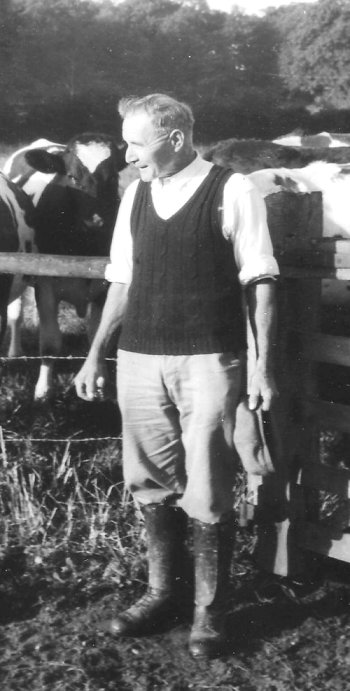 Now can England be in danger,
Is there any chance of war?
You talk about your fighting men
And your Quifer (?) gunner corps.
You talk about your Wellingtons
That fought at Waterloo,
But how about your humble
On the field of Pinky-Poo?
Yes. I was doing my duty. A doing my duty.
When the bullets were flying as thick as the mud.
I was shedding my drops of blood,
Fighting with the corporal in the ammunition van.
Yes, I was doing my duty like a soldier and a man.
Now you think when under canvas
What a pleasant time was spent,
Especially when there's fifty of you
Bunged into a tent.
There's a dozen pairs of Bluchers1,
Laying all around.
But what a rush for Keatings2
When the enemy he is found.
Yes. I'll be doing my duty. A doing my duty.
Soon as ever a flea pop out his head.
I'd give him a bash with a loaf of bread.
And then the blooming tent was like the battle of Sudan
For I was doing my duty like a soldier and a man.
Now every Sunday night when I go out,
With my best tunic dress,
A tuppeny cigar is in my mouth
And a loaf stuck up my chest.
I'm chasing bits of calico as soon as it get dark
But I've always got my eye upon the benches in the park.
Yes. I'll be doing my duty. A doing my duty.
A swinging my regimental stick,
Making myself look a bit thick,
And when the moon is out of sight,
With Flo and Mary-Ann
Oh I'll be doing my duty like a soldier and a man.
How's that?
1 Bluchers - A leather laced up half-boot; so called after Field-Marshal von Blucher (1742-1819) and notoriously uncomfortable.
2 Keating's Flea Powder.
Sung on the halls by Frank Coyne (1875 - 1906).
*1 - 2 Abie My Boy
Ted Cobbin and Peter Plant (melodeons): The Crown, Great Glemham 1975
This was a popular music hall song from 1919 by Silberman and Grock. It was recorded by Swiss born Karl Adrien Wettach who became the toast of European entertainment as ‘Grock’ the clown. The talented musician, who could play 24 instruments and speak many languages, became the king of clowns in the early 1900s. The song was recorded by Grock and Lily Morris on Pathe 1128 in July 1919. Grock also started a successful music publishing business for his popular songs.
1 - 3 Blow the Candle Out (Roud 368, Laws P17)
William 'Jumbo' Brightwell: Leiston 1977
Now its of a young apprentice
Who went to court his dear
The moon was shining brightly
And the stars were twinkling clear.
He went to his love's window
To ease her of her pain
And she quickly rose and let him in
And went to bed again.
My father and mother in yonder room do lie
They are embracing one each other,
And so may you and I?
They are embracing one each other,
Without a fear or doubt
So its take me in your arms, my love,
And we'll blow the candle out.
Oh my father would be angry
If he should come to know
My mother would be delighted
To prove my overthrow.
So I would not for five guineas
Lest they should find me out
So its take me in your arms, my love,
And we'll blow the candle out.
'Twas early next morning before the break of day
He quickly rose and put on his clothes
And said he was going away.
She was so loathe to part with him
But dare not speak it out
So its take me in your arms, my love,
And we'll blow the candle out.
When six months were over six months it's and a day.
He wrote his love a letter that he was going away.
He wrote his love a letter without a fear or doubt
Saying he never woud return again
To blow the candle out.
So come all you pretty young Leiston girls
A warning take by me.
Never trust a 'prentice boy
One inch above your knee.
For when they're in their 'prenticeship
They swear their time is out.
And he'll leave you as mine left me
To blow the candle out.
That's that one.
Blow the Candle Out, or The London Apprentice as it is sometimes called, has turned up all over these islands (Greig/Duncan 788 - six versions), probably due to its wide broadside popularity; these make up half of Roud’s 75 entries. Only six other English singers appear in the Index. Jumbo learned it from Crutter Cook at The Eel’s Foot.
Other recordings on CD: Jimmy Gilhaney (Rounder CD 1778).
1 - 4 The Highwayman and the Farmer’s Daughter (Roud 2638)
Alec Bloomfield: Newark, Nottinghamshire 1975
There was an old farmer in Cheshire
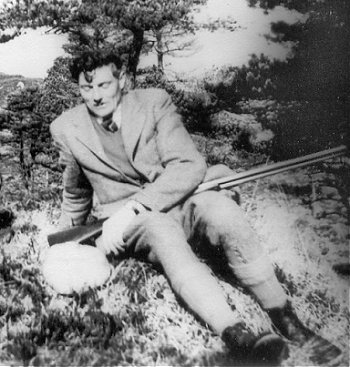 To market his daughter did go.
And thinking that no one would harm her
She had often been that way before.
Thinking that no one would harm her
She had often been that way before.
But alas she met with a highwayman.
His pistol he drew to her breast.
“Deliver your money, your clothing
Or you will die in distress.
Deliver your money, your clothing
Or you will die in distress."
Now he stripped this damsel near naked
And he gave her the reins for to hold.
And there she stood shivering and shaking
Almost frozen to dead with the cold.
And there she stood shivering and shaking
Almost frozen to dead with the cold.
She put her right foot in the stirrup
And straddled her horse like a man.
Over hedges and ditches she galloped
Crying, “Catch me you rogue if you can.”
Over hedges and ditches she galloped
Crying, “Catch me you rogue if you can.”
Well this rogue he so quickly followed after
And it made his old horse puff and blow.
And finding he couldn't overtake her
For she'd reached her father's own door.
And finding he couldn't overtake her
For she'd reached her father's own door.
“Oh daughter oh daughter what's happened?
You have been at the market so long.”
“Oh father I've been in great danger
But the rogue he has done me no harm.”
“Oh father I've been in great danger
But the rogue he has done me no harm.”
So she put her great horse in the stable,
And fed him on corn and hay.
And then she sat counting the money
From midnight to twilight next day.
And then she sat counting her money
From midnight to twilight next day.
She had all the money in her saddle bags ... Laughs.
There Was a Rich Farmer at Sheffield (as it’s more usually called), or The Farmer of Chester, or The Lincolnshire Farmer’s Daughter to used the title given to the song by Henry Parker Such on his mid-19th century broadside, in common with another ballad, The Boy and the Highwayman, is related to the ballad of The Crafty Farmer (Child 283) in which a farmer outwits a would-be robber. The precise relationship between these three 18th century ballads has never been successfully established. Some scholars believe that as the central characters of the plot are different, then so too are the ballads. Others, however, believe them to be basically identical because all three ballads are sung to the same 17th century tune The Rant which, in 17th century ballad operas, was better known as Give Ear to a Frolicksome Ditty.
Other recordings on CD: Pop Maynard (Sussex) - Musical Traditions MTCD400-1; Wiggie Smith (Gloucestershire) - Musical Traditions MTCD307; Jimmy McBeath (Scotland) - Musical Traditions MTCD311-2; Charlie Stringer (Suffolk) - Veteran VTC2CD; Packie Manus Byrne (Donegal) - Veteran VT132CD.
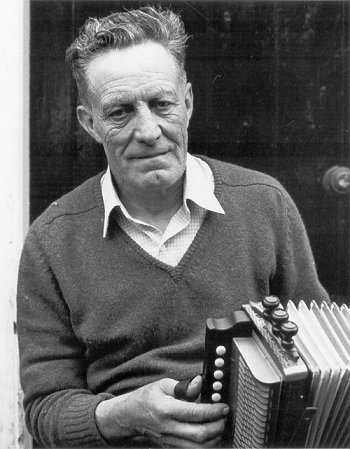 1 - 5 Coal-Black Mammy
Fred Pearce (melodeon): The Ship Inn, Blaxhall 1974
This is quite a performance by Fred Pearce, on a pretty complicated tune. Coal-Black Mammy was composed by Ivy St Helier, written and performed by Laddie Cliff, 1922.
1 - 6 Talking about learning songs
Cyril Poacher and Geoff Ling: The Ship Inn, Blaxhall 1974
CP: “Now my grandfather and Geoff's grandfather and Aldie Ling's grandfather, they were three brothers. Now, you're talking about competition for singing. They used to, them three. And they used to get wrong with one another over it too. Yes they did. That's when they'd get into scrapping over it - who could sing the best.”
GL: “Course the pubs then, when we were about five, they'd be open all day.”
CP: “All day, back in that time of day. And they'd sing one against the other the whole dinner time. One against the other ... “
KS: “Did the singing ever die out at Blaxhall?”
CP: “No.”
KS: “It's kept going all the time.”
CP: “Yeah. Well I don't know about the wartime, mind you. 'Cause I wasn't here, only when I was on leave, but I don't think that died out. No, I mean old Bob and them used to carry on just the same ...” “... Actually you can learn songs by hearing people sing them, in the pub. You know, singing them so many times you can pick 'em up like that.”
KS: “How long does it normally take you to learn one like that?”
CP: “I don't want to hear one only about three times before I'd know it.”
GL: “Course that's the only thing you really could learn them by then. Because they couldn't write them down to you. If you asked them to write them down, you see, they couldn't write them down.”
CP: “I mean Bob Scarce he'd tell you a - he'd let you listen to him singing a song, but if you asked him to write it out he couldn't write it out for you.”
GL: “So the more you went and saw in the pub, and listened to them, that's the only way you got 'em you see. And that's why, that's how that kept coming down.
CP: “I mean they weren't supposed to know you were learning off of them.”
GL: “But if he sang it you wouldn't get up and sing it behind him. You see they used to have a sort of rotend. If you got up and sang a song, whatever you sung, nobody didn't go and sing, didn't repeat it. That's how it used to be. We used to leave it to the old boys what sang them songs. You know, just so you could keep in good harmony, good company - that's what they called it - good company. You didn't you see, you didn't want to offend anybody. Now that's like us, like me and Cyril'll sing, we go in anywhere and we sing used to sing the songs what used to be in the 1930s. The later ones you see, like used to come off the wireless. We used to pick them out you see. In the ‘30s you see, and Bob's and that used to be all the 1912 and all that. And a lot of the songs come out after the first world war. That's where they took them all from didn't they ... The more you heard them singing, you used to pick 'em up.”
CP: “See, that's the only thing you gotta do it by ...”
GL: “That's the only thing you gotta do it by. If you didn't go these places. I mean that's like whenever you go round, you'll always hear another song different. It may be a different version, but they used to have them particular songs, you see. And they used to sit and wait. There wasn't anybody who was gonna sing anybody elses song, was there Cyril? That's how it used to come about, you see.”
CP: “I mean, when they used to say, 'Order please, for Bob.' Well you knew what he was gonna sing. He'd sung it so many times you knew what was coming. One or the other. Either General Wolfe or Broadside, or one of them. Bound to be one of them ...”
GL: “See if Jack Smith sang a song, and they called on Elty Bob. He'd sing his song and then Elty Bob would sing his song and then the next one. You see, Wicketts used to request, you know ask, to, 'Give order please, Mr Bob Scarce will now oblige with a song.' Or a ditty. Some used to say a ditty, a little ditty. He'd probably say, 'Give us General Wolfe, Bob', or, 'Give us Broadside.' Sort of nominate what he wanted him to sing. I mean Bob was a bloke like this. If you'd asked Bob to sing General Wolfe if he weren't in the mind, he'd up and sing something else.” Both laugh.
1 - 7 Three Jolly Sportsmen (Roud 17)
Bob Scarce: The Ship Inn, Blaxhall 1972
WR: “Can we have lovely order ladies and gentlemen? Order!”
It's of three jolly sportsmen
“Order for Bob please”
As I have heard people say.
They took five hundred guineas
All on one market day.
Now as they were riding along the road
As fast as they could ride.
Saying, “Stop your horse.” cried Johnson
“For I hear a woman cry.”
“But I shall not stop,” said Lipston
“I shall not stop.” Said he.
“I shall not stop.” Said Lipston
“A robbed we shall be.”
Now Johnson he got off his horse
To search the groves all round.
He found a woman stark naked
With her hair pinned to the ground
“Order!” “Order!”
A woman, a woman.
How came you here fast bound?
How came you here stark naked
With your hair pinned to the ground.
“They stripped me they robbed me
Both hands and feet they bound
They left me here stark naked
With my hair pinned to the ground.”
Now Johnson being a valiant man
A courage man so bold.
He took his coat from off his back
For to keep her from the cold.
The Johnson he got on his horse
And the woman on behind.
She clasped her fingers to her ears
And she give three warning cries.
Now up stepped three young swaggering young men
With swords all in their hands.
They bid him for to stop and stand
And they bid him for to stand.
“I will stop. I will stand.” Cried Johnson
“I will stop. I will stand.” Cried he.
“But I never was in all my life
Afraid of any three.”
Now Johnson drew his glittering sword
And two of them he's slain.
Whilst he was killing the other one
The woman stabbed him behind.
“I must fall, I must fall.” Cried Johnson
“I must fall upon the ground.
It's because of this wicked woman
She has caused my deathly wound.”
Oh she shall be hung in chains of gold
For the murder she has done.
She has killed the finest butcher boy
That ever the sun shined on.
She shall be hung in chains of gold
For the murder she has done.
She has killed the finest butcher boy
That ever the sun shined on.
“Good old Bob!” “Good old Bob!...”
Cheering and applause.
This old ballad has 162 Roud entries, principally from books and collections, yet is still to be found in the living tradition in England and Scotland, and there are 30 sound recordings. There are also many examples from Canada and the USA, but only four listings for Irish singers. It is probably founded on an event that took place in 17th century England and was certainly printed in a blackletter broadside in 1678 under the title Three Worthy Butchers of the North.
It’s a characteristic of songs containing the exploits of named protagonists that these names rarely remain constant. In this ballad, two of the three butchers have acquired a huge array of the most unlikely sounding names over the centuries, yet hero Johnson remains undiminished in almost every version.
Other recordings on CD: Biggun Smith (Musical Traditions MTCD307); Mary Drain (Rounder CD 1108); Harry Cox (Topic TSCD 512D); Walter Pardon Topic (TSCD 514).
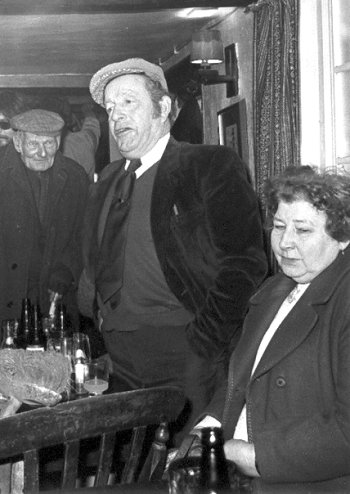 1 - 8 Green Bushes (Roud 1040, Laws P2)
Geoff Ling: The Ship Inn, Blaxhall 1974
“Order please.”
It was early one morning in the merry month of May
the cocks were a crowing, the lambs there at play.
Twas there I spied a female, so sweetly sang she
Down by the green bushes where she used to meet me.
“Good morning, good morning”, these words she did say.
“Why are you a walking alone all this day?”
“I am looking for my true love”, so sweetly sang she
Down by the green bushes where he used to meet me.
“I'll buy you fine clothing and a rich silken gown
I'll buy you sweet flounces that hang to the ground.
If you'll forsake your own true love
And come along with me
Down by the green bushes where he used to meet me.”
I want none of your clothing nor your silk and gowns
I'm not so hard up to marry for clothes.
But if you will prove honest and be loyal and true
I'll forsake my own true love and get married to you.
And if you will prove loyal and be honest and true
I'll forsake my own true love and get married to you.
“Good old Geoff.”
Geoff may have learned this song from Walter ‘Yinka’ Friend, who Cyril Poacher said was the first one to sing it in the area. Although The Green Bushes was printed widely on broadsides it does not appear to have survived well in tradition - only 14 recordings - a surprising fact when one considers its one-time popularity. In 1845 J B Buckstone used the song as a basis for a stage play and in 1850 the popular music-hall singer Sam Cowell included a set in his '120 Comic Songs', and a similar tale appeared in Carey's Musical Century of 1740. Some scholars, including Cecil Sharp and Sabine Baring-Gould, believed however that The Green Bushes is based on the Scots song My Laddie is a Cankert Carle which, in an English form called Whitsun Monday can be dated to around 1760.
It was fairly popular in Ireland due, possibly, to a 78 recording. It has been seen published in a 'Sing a Song of Ireland' type book and has been sung at fleadh competitions, where it seems acceptable as an authentic Irish ballad, but Roud lists 103 instances, of which only two are Irish. He also identifies an Australian version from the superb Sally Sloan of New South Wales.
Other recordings on CD: Phoebe Smith (Veteran VT136CD); Harry Brazil (soon to be published on Musical Traditions); Walter Pardon (Musical Traditions MTCD305-6); Cyril Poacher (MTCD303).
*1 - 9 Maggie May (Roud 1757)
Geoff Ling: Blaxhall 1972
Now come all you soldiers bold, come listen to my plea
When you've heard my tale, you'll pity me.
For I was a darned damn fool at the port of Liverpool
The first time that I came home on leave.
I was paid out at the hold with the boys of Merrybold
Three-pound-ten a week was all my pay.
When she mingled with my tin I was very much taken in
By a little girl whose name was Maggie May.
Too well do I remember when I first met Maggie May
She was cruising up and down old Canning Town.
Oh she wore her clothes divine, like a figure on the line
So I being a soldier I gave chase.
In the morning I awoke with my heart all sore and broke
No trousers, jacket, waistcoat could I find.
When I asked her where they were,
She said to me, “Kind sir,
They're down in Stanley's pawnshop, number nine.”
To the pawnshop I did go no trousers,
Jacket, waistcoat could I find
And a policeman came and took that girl away.
Oh she robbed so many a sailor and many a yankee whaler
She won't waltz down Lime Street anymore.
Oh Maggie, Maggie May, they have taken her away
To slave like a nigger in the corner of Berkley Square.
The judge he guilty found her
For robbing a homeward bounder
And he paid her passage back to Monte Bay.
Despite its recent popularity, this is actually a rare song in the oral tradition; Roud has only 19 entries, mostly from East Anglia.
Other recordings on CD: Bob Roberts (Saydisc CD-SDL 405).
1 - 10 Mary Anne (Roud 21228)
Arthur 'Spanker' Austin (Fiddle and Song): Woodbridge 1974
Mary Anne is after me.
Full of love she seem to be
My mother said, “It's plain to see.
She wants you for her young man.”
Father said, “If that be true
Johnny, my boy, be careful do.
There's one bigger fool in the world than you
That's Mary Anne!”
Laughs.
Mary Ann, She’s After Me was written by Fred E Leigh in 1911 and was sung on the Halls by George Bastow. George Fradley also sang it on his Veteran cassette.
*1 - 11 Soldier’s Joy
Fred List (melodeon): Framlingham 1974
One of, if not the most popular fiddle tune in history, widely disseminated in North America and Europe in nearly every tradition; it was first published in the latter part of the 18th century.
*1 - 12 All Tattered and Torn (Roud 1407)
Percy Ling: Snape 1975
Now as I was a walking up fair London Street
I met a poor boy who'd no shoes to his feet.
Being as I had money and plenty to spare
I popped in a fruit shop and I bought him a pear.
Toodle-loo Toodle-lay
You ought to have seen him eat it.
Now I once knew a man he was tattered and torn
He was mowing the grass on a gentleman's lawn
When the door opened wide and a lady so fair
Said, “Come round the back
Oh it's much longer there.”
Toodle-loo Toodle-lay
You ought to have seen him run round.
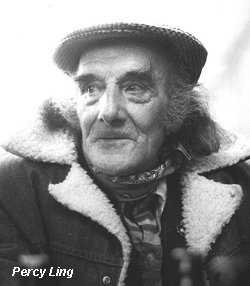 Now I once had a dream and to Heaven did go
Where did you come from they wanted to know.
“I came from Snape”, Old Peter did stare.
Said, “Come round the back,
You're the first bugger from there!”
Toodle-loo Toodle-lay
You ought to have seen me run round.
Now I called on my sweetheart,
Her name was Miss Brown.
She was having a bath and she could not come down.
I said, “Slip on somethingCome down half-a-tick.”
She slipped on the soap and she did come down quick.
Toodle-loo Toodle-lay
You ought to have seen her come down.
Now a nasty black eye had my Uncle Jim
He said, “Someone threw a tomato at him.”
“Tomatoes don't hurt.” I said with a grin.
Oh yes they do when they come in a tin.
Toodle-loo Toodle-lay
And a nasty black eye had he got.
Now put four young ladies round four cups of tea.
They'll talk of more scandal than ever you see.
But put four young men round a barrel of beer
They'll talk of more work they can do in a year.
Toodle-loo Toodle-lay
I've proved it so I ought to know.
This fairly rare song was also sung in Suffolk by Geoff Ling, Jumbo Brightwell and Arther Drewery. The other five named singers are scattered all over England, from Co Durham to Oxfordshire.
1 - 13 The Nutting Girl (Roud 509)
Cyril Poacher: The Ship Inn, Blaxhall 1972
“Sing us the Nutting song, Cyril!”
“All right.”
“Order please!”
Now come all you jovial fellows,
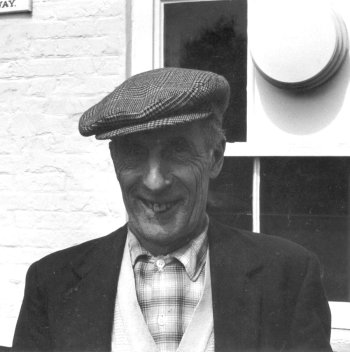 Come listen to my song
It is a little ditty and it won't contain you long
It's of a fair young damsel, she lived down in Kent
Arose one summer's morning, she a-nutting went.
With my fal-lal to my ral-tal-lal
Whack-fol-the-dear-ol-day
And what few nuts that poor girl had
She strew them all away.
Now it's of a brisk young farmer,
Who was ploughing of his land
He called unto his horses, to bid them gently stand
As he sit down upon his plough, all for a song to sing
His voice was so melodious, it made the valleys ring
With my fal-lal ...
Order!
Now it's of this fair young damsel,
She was nutting in the wood
His voice was so melodious, it charmed her as she stood
She could no longer stay
And what few nuts she had, poor girl,
She strew them all away
With my fal-lal ...
She then came to young Johnny,
As he sit on his plough
She said: “Young man I really feel
I cannot tell you how''
He took her to some shady broom,
And there he laid her down
Said she: “Young man, I think I feel
The world go round and round''
With my fal-lal ...
Now, come all you young women,
This warning by me take
If you should a-nutting go, please get home in time.
For if you should stay too late, to hear that ploughboy sing
You might have a young farmer to nurse up in the spring.
With my fal-lal ...
“Good old Cyril!” Cheering and applause.
A song almost exclusive to the southern half of England according to Roud, though there are a few Scottish versions as well. An excellent appraisal, by Ginette Dunn, of Cyril’s performance of this song appears in the booklet notes to his own CD on Musical Traditions (MTCD303).
It seems axiomatic that, in folk songs, female nut-gathering leads to ravishment ... Maybe there should be a printed warning: This Song Contains Nuts. All the other CD recordings appear to be of Cyril Poacher.
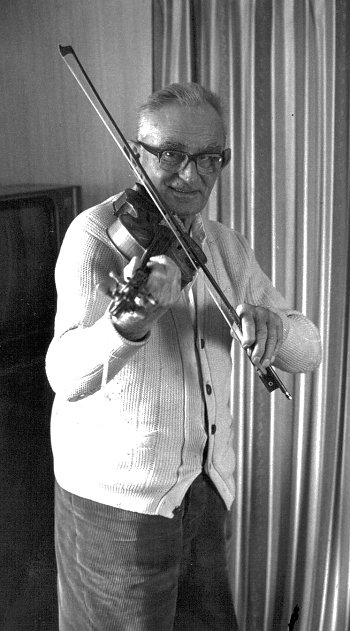 *1 - 14 The Kildare Fancy, hornpipe
Fred 'Pip' Whiting (fiddle): Worlingworth 1977
Fred's version is the same as the one in O'Neill, and he may either have learnt it from a printed source (he was musically literate and collected books of tunes all his life) or from the Irish fiddlers he met during his years in Australia. The tune was also recorded on a 78 by Jimmy Shand as the Dundee Hornpipe, and has also been likened to Harvest Home/Cliff Hornpipe.
1 - 15 The Ship I Love (Roud 17057)
Fred 'Pip' Whiting: Worlingworth 1977
Our gallant ship was labouring
In the stormy seas.
The captain stood among his crew
“Come gather round” said he.
“The ship is holed an. d sinking
There on the lee is land.
So launch your boats and pull away
But I at my post will stand.”
“Goodbye my lads goodbye.
You take to the boats lads
You save your lives.
I have no one to love me
You have your children and wives.
You pull for the shore lads
Praying to Heaven above.
While I go down in the angry deep
With the ship I love.”
The crew stood hesitating.
Their hearts were staunch and true.
And then up spake the cabin boy
“Sir I will die with you.”
The captain cried, “What mutiny.
I'm the captain here.
So launch your boats and pull away
And think of your children dear.”
Goodbye my lads goodbye.
You take to the boats lads
You save your live.
I have no one to love me
You have your children and wives.
You pull for the shore lads
Praying to Heaven above.
While I go down in the angry deep
With the ship I love.
“That's it , Keith.”
The Ship I Love was written in 1898 by Felix McGlennon and sung by Tom Costello. It's a very little-known song if Roud’s 4 entries are representative. The only other English recording there is Gwilym Davies’ 1975 one of ‘Nellie’ in Waterlooville, Hampshire, but Mike Yates tells me that he also recorded it from Freda Palmer - as yet, this has not been issued.
*1 - 16 I’m a Man you don’t Meet Every Day (Roud 975)
Alec Bloomfield: Newark, Nottinghamshire 1975
I've a neat little cottage all made out of mud
Not far from the County Kildare.
Just an acre of land and I grow my own spuds
I've enough and a little to share.
Don't think I've come over to look for a job
It's only a visit to pay.
So be easy and free going boozing with me
I'm a man you don't meet every day.
So fill up your glasses have just what you please
For whatever the damage I'll pay.
So be easy and free going drinking with me
We're the chaps you don't meet everyday.
'Cause we landed in London a few months ago
And we took a stroll out of the Star.
There was Paddy McGee, and Algie and I
We had lots of fine ale in the bar.
Then I spoke to him kindly took him by the hand
These words unto him I did say.
“Come be easy and free when you're boozing with me
I'm a man you don't meet everyday.
So fill up your glass and just have what you please
Whatever the damage I'll pay.
Be easy and free come drinking with me
I'm the man you don't meet everyday.”
This song seems to be pretty well-known today, but it’s quite rare in the oral tradition if Roud’s Index is to be believed. This shows 27 entries from all over (including Australia, Canada and the USA), many of which are from the Gypsy and Traveller communities.
Lena Jones sings it on Here’s Luck to a Man (Musical Traditions MTCD320), as will Lemmie Brazil on the forthcoming Musical Traditions Brazil Family 3-CD set, Down by the Old Riverside (MTCD345-7).
1 - 17 Step Dance Tune
Peter Plant (melodeon): Great Glemham 1975
A hornpipe which doesn't seem to have preserved a standard name, this tune seems to have been particularly popular for step-dancing in Norfolk and among travellers. Peter Plant's version is very close to the version which Bob Cann called the Cokey Hornpipe.
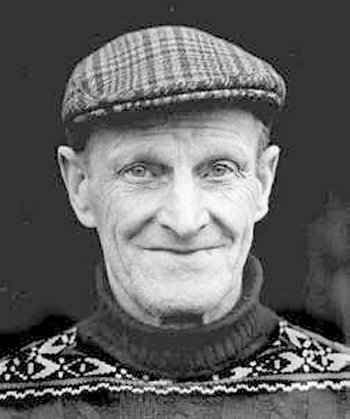 *1 - 18 The Parson’s Creed (Recitation)
William 'Jumbo' Brightwell: Leiston 1975
And I'll tell you one we used to laugh about. Sometimes I said it a time or two in the Foot, when I said, ‘I can't sing’, I said, ‘but I'll give you a recitation’. Laughs. It's called the Parson's Creed and it start with a ...
It's money oh money, thy praises I sing
Thou art my saviour, my God and my King.
It's in thee I trust in all the day long
And it is thee forever, I'll give you my song.
For money, I don't pray without it
My Heaven was closed to all those without it
For this is the essence of a Parson's religion
Come right up the church
And be plucked like a pigeon.
Now I've horses, I have carriages,
And I have got servants and all.
So I shan't want to foot it like Peter and Paul.
Neither shall I be like John, live on locusts and honey.
So come right up the church and plonk down your money.
And when in the cold silent earth I shall be laid low
There to sleep with the blessed who went long ago.
There I'll slumber in peace until the great resurrection
Then I'll be the first on my feet to make another collection.
Laughs.
1 - 19 Cock of the North / Pop Goes the Weasel
Tommy Williams (mouthorgan): Nr. Chelsworth 1972
Nothing really needs to be said about what are probably the two most common jigs in the English repertoire.
1 - 20 The Seeds of Love (Roud 3)
Alec Bloomfield: Newark, Nottinghamshire 1975
AB: And this is called I sowed the seeds of love.
Come all you young men and girls
That are just now in your prime.
I would have you to weed your garden gay
And take care not to leave any thyme.
I sowed the seeds of love
And sowed them in the spring.
I gathered them up they blossomed every morn
While the small birds sweetly sing.
My garden well planted out
Flowers perfume everywhere.
I had not the liberty to choose for myself
The flowers that I loved dear.
My gardener standing by
And I asked him choose for me.
He chose me a lily, a violet, and a pink
But these I refused all three.
The lily I did not like
Because it fades so soon
The violet and the pink I fairly overlooked
And I vowed I'd wait ‘til June.
In June a red, rose bud
That is the flower for me.
So I pulled and I snatched at the red rosy bud
And I gained a green willow tree.
Oh the willow tree it did twist
and the willow tree it did twine.
And so will be with a false hearted man
who gained that heart of mine.
My gardener standing by
He told me take good care.
For right in the middle of the red rosy bud
There grew a sharp thorn there.
I told him I'd take no care
Until I felt a smart.
I pulled and I plucked at the red rosy bud
‘Til it pierced me to the heart.
Then I locked my garden gate
Resolved to keep the key.
When a young man came with his flattering tongue
And stole my heart away.
My garden was overun
No flowers in it grew.
The beds once covered with sweet sweet thyme
Are now all covered with rue.
And rue has a wild running root
It runs both wild and free.
So I plucked everyone of those wild running roots
And planted a jolly oak tree.
Stand you up, stand you up, jolly oak
Stand up and be true to me.
And I will prove true as the one that I love
As true as the stars in the sky.
Oh thyme is a precious thing
that grows beneath the sun.
Time, time brings all things to an end
And time goes on and on.
This is a very well-known song, with 241 Roud entries from right across the Anglophone world, but with England accounting for the vast majority.
Alec got this fine song from his father, Harry, who may possibly have learned it from George Spencer Leake, a merchant seaman from Snape who was nicknamed 'Good Old 71'. The Seeds of Love, or Plenty of Thyme / The Sprig of Thyme as it is better known - though Garners Gay seems a far closer relative to Alec's version - belongs to that class of songs and ballads (going back at least to A Nosegaie Alwaies Sweet ... included in A Handful of Pleasant Delights, 1584) which centre around the symbolism of flowers - thyme for virginity, rue for its loss, rose for passion, willow for regret, etc.
The leading nineteenth century music-antiquarian, William Chappell included Seeds of Love as one of the three most popular songs with servant-maids of his time (1859). It doesn't turn up in the written record until 1816, although one characteristic verse appears in a version of The Gardener printed in a Scottish chapbook in 1766.
Other recordings on CD: Cyril Poacher (Musical Traditions MTCD303); George Dunn (MTCD317-8); Fred Jordan (Veteran VTD148CD); Pop Maynard (Topic TSCD 660); Ernie Payne (Veteran VTC6CD); George Withers (Veteran VTC9CD); Billy Bartle (EFDSS CD002).
*1 - 21 The Drowned Lover (Roud 185, Laws K18)
William 'Jumbo' Brightwell: Leiston 1975
Now it was of a wild young couple
In Scarborough did dwell
She loved a young sailor and he loved her as well
He had promised to be married
When back he did return
But instead of getting married he found a watery tomb.
For the ship set sail from Scarborough
From Scarborough to the bay
When the winds did blow and whistle
And those billows loud did roar.
The winds did blow and whistle
And those billows loud did roar.
And it tossed these poor sailors all on an early shore.
Well some of them had sweethearts
And some of them had wives.
Which caused these poor sailors
To swim out for their lives.
While some they managed to reach shore
As it happended to be so
But this unfortunate sailor he found a watery tomb.
As soon as the news reached Scarborough,
To the beach this fair maid went.
Ringing of her hands and she tore her hair
Like a lady in great distress
“Crying come ye cruel billows
It's come roll my love on shore.
That I might view his features,
Kiss his fond lips once more.”
As she was walking from Scarborough,
From Scarborough to the bay
She saw a drowned sailor all on the beach did lay
She so nimbly stepped up to him
But immediately did stand
She knew it was her own true love
By the mark upon his hand.
She kissed him, she fondled him, she kissed him
A thousand and oe'r
She kissed him, she cuddled him
A thousand times or more.
She kissed and she cuddled him
A thousand times or more
Then she kissed his cold lips.
Broken hearted she died.
In a churchyard in Scarborough is where this couple lie
Embracing one each other in such a loving way
Come all you men and maidens who do this way pass by
Think you of this loving couple who under here do lie.
“There you are.”
A well-known song in both England and Scotland, but it doesn’t appear to have crossed the sea to Ireland. Almost all versions mention Scarborough (or Stowbrow) as the setting of the tragedy.
Other recordings on CD: Sam Larner (Topic TSCD 652); Frank Verrill (Topic TSCD 662); Harry Cox (Topic TSCD 512D); Harold Smy (Veteran VTC5CD).
*1 - 22 The Lincolnshire Poacher (Roud 299)
Billy List: Brundish 1977
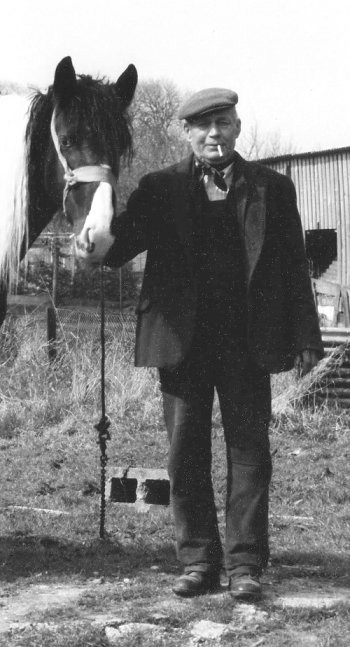 As I was bound apprenticed
In far off Lincolnshire,
I served my master truly for over seven year,
And I took up a poaching,
As you will plainly hear,
For it's my delight in the shiny night
In the season of the year.
As me and my companions
ere setting of the snare,
The gamekeeper was watching us,
For him we dldn't care,
For we can wrestle and fight, my boys,
Jump over anywhere,
For it's my delight in the shiny night
In the season of the year.
As me and my companions
Were setting four or five,
Taking them up again, my boys,
We caught a hare alive.
We caught a hare alive my boys,
And through the woods did steer
For it's my delight in the shiny night
In the season of the year.
We slung him across the shoulders
And wandered through the town
Called in to a neighbour's house,
And sold her for a crown;
We sold her for a crown, my boys,
But I did not tell you where
For it's my delight in the shiny night
In the season of the year.
Now good luck to every gentleman
That lives in Lincolnshire
Success to every poacher
Who wants to sell a hare
Bad luck to every gamekeeper
Who will not sell his deer
For it's my delight in the shiny night
In the season of the year.
Season of the year!
Despite this song having appeared in so many ‘National’ song books in the 20th century, it seems to have been not much taken up in the oral tradition, if Roud’s total of only two sound recordings is accurate. These are by Jim Baldry, in 1956 in Melton, and a far later Gloucestershire recording by Harry Brazil. So we may assume that Billy List learned the song from Jim; many of the singers Keith spoke to cited Baldry as the source of some of their songs.
Other recordings on CD: MT Records forthcoming 3-CD set of the Brazil Family, Down by the Old Riverside (MTCD345-7).
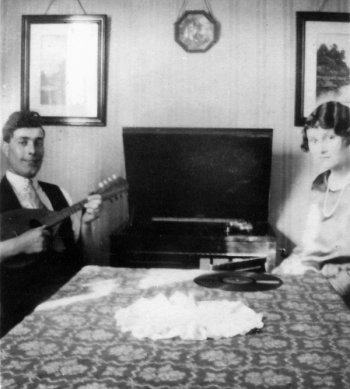 1 - 23 Talking about his grandfather
George Ling: Croydon 1975
GL: “My grandfather - that's Aaron Ling. My grandfather used to sing, oh he used to play an accordion and a concertina - a little German concertina and accordion, Aaron did. He used to sing Annie Laurie but he'd get so high with it his old whiskers used to ... Laughs. And he used to make them here dancing dolls. I told you before did I? Used to sit there, and stick a skewer in the fire, a meat skewer - get some people cut the wood out the hedges. And make their legs and put a piece of wire through 'em. Then the little stomach, put a bit of wire through that. And then he used to have a board underneath - on the seat like this - he used to have a board. And he used to hold that and he'd keep tapping his hand and they used to dance like anything! Just like these puppets. And they said old grandfather made them.”
KS: “And what was the little song they used to sing with it?”
GL: “Oh, Gawd bless you heart when your legs fly up! Laughs. That was a bit of a type of stepdance then.” Lilts the tune. “Gawd bless you heart when your legs fly up! Lilts. Pigeon on the Gate! That's it - they used to play Pigeon on the Gate to it.”
*1 - 24 The Fairy’s Hornpipe and dancing doll
Fred 'Pip' Whiting (fiddle) and Cecil Fisk (dancing doll): Worlingworth 1977
As we’ve learned above, Cecil was best known for playing the drums - which accounts for his strict timing with a dancing doll. Indeed, I’ve rarely heard a better doll-dancer - although he and Pip lose touch with each other towards the end of the track, but pull it back together after a few bars of anarchy.
*1 - 25 You can Look but you Mustn’t Touch! (Roud 21238)
Jimmy Knights: Little Glemham 1974
When I was a boy, a mischievious young elf
I always was in the habit of helping myself.
My mother used to put everything out of my way
And well I remember these words she would say.
You can look but you mustn't touch, you musn't touch
Will you keep your hands off
You're inclined to be a little forward
Now don't you be so rude.
You can look but you mustn't touch, you musn't touch
Will you keep your hands off
Look at everything and touch nothing
Now don't you be so rude.
Now at the age of eight years I was still not a fool
I was sent every day to a young ladies' school.
I would romp with the girls and not let them be
Till my schoolmistress gave this old lecture to me.
You can look but you mustn't touch, you musn't touch
Will you keep your hands off
You're inclined to be a little forward
Now don't you be so rude.
You can look but you mustn't touch, you musn't touch
Will you keep your hands off
Look at everything and touch nothing
Now don't you be so rude.
Now as I grew up I loved a sweet maid
and although she loved me of me she was afraid.
I dare not embrace her or ask for a kiss
If I did upon my soul she would answer like this.
You can look but you mustn't touch, you musn't touch
Will you keep your hands off
You're inclined to be a little forward
Now don't you be so rude.
You can look but you mustn't touch, you musn't touch
Will you keep your hands off
Look at everything and touch nothing
Now don't you be so rude.
Written and performed on the Halls by Harold Montague (b.1874)
*1 - 26 Wild Flowers
Alec Bloomfield: Newark, Nottinghamshire 1975
There's a dark dreary cloud hanging o'er me
And a mighty big load on my mind.
When I think of the prospects before me
And the old farm I'm leaving behind.
Chorus:
Where wild flowers called weeds give the colour
And the music's from nature alone.
When the motor car goes near that arbor
There are many who see the dream home.
The old house in the woods or the meadow
Now's a place where few people go.
And the beauty once seen through the window
'Twas something the last century knew.
Where wild flowers ...
Here a bird sits and preens a bent feather
In winter it's quiet and still.
Let's hope it stays that way forever
Will you help to make sure that it will.
Where wild flowers ...
So shoulder your packs and get with it
It's not such a wonderful plan
To escape from the noise and forget it
All the vittalls will keep in the can.
Where wild flowers ...
AB: “How's That?”
KS: “That's good.” “Now that was one you wrote yourself?”
AB: “That's one of my own I wrote myself, yeah.”
KS: “That's very good.”
*1 - 27 The Yellow Handkerchief (Roud 954)
Cyril Poacher: The Ship Inn, Blaxhall 1972
“Here we go then” “Lovely Order!” “Order, order”
Once I loved a young girl as I loved my life
“Order! Order!”
And to keep her in flash company has ruined my life.
Flash company my boys, like a great many more
If it hadn't been for flash company
I should never had been so poor.
 So it's take the yellow handerkerchief
In remembrance of me
And tie it round your neck love in flash company.
Flash company my boys, like a great many more
If it hadn't been for flash company
I should never had been so poor.
Repeat
Once I had a colour as red as a rose
But now it's as pale as the lily that grows
Like a flower in the garden with all my colour gone
For you see what I'm coming to through loving that one.
All together!
So it's take the yellow handerkerchief
In remembrance of me
And tie it round your neck love in flash company.
Flash company my boys, like a great many more
If it hadn't been for flash company
I should never had been so poor.
Oh its fiddling and dancing was all my delight
And to keep her in flash company
Has ruined my life.
Flash company my boys, like a great many more
If it hadn't been for flash company
I should never had been so poor.
So it's take the yellow handerkerchief
In remembrance of me
And tie it round your neck love in flash company.
Flash company my boys, like a great many more
If it hadn't been for flash company
I should never had been so poor.
“Good old Cyril.”
This is a song that is almost exclusive to Suffolk, although there are a small number of sightings along the south coast - Sussex, Hampshire and Dorset. Cyril Poacher learnt it from Eli Durrant of Blaxhall - and we heard it in the repertoires of at least six singers in that area in the late 1960s. The song was first noted in Limerick in the 1850s and was still well known recently, not only in East Anglia, but also among Travellers throughout southern England.
Despite being really nothing more than a collection of floating verses, the song maintains a similar form all over East Anglia - and is unusual in that the verse:
In the middle of the ocean, there shall grow a willow (or myrtle) tree,
If ever I prove false, my love, to the one that loves me.
... which is common to almost all other versions (and a good many other songs besides) is rarely found here.
Other recordings on CD: Phoebe Smith (Topic TSCD 661, Veteran VT136CD); Mary Ann Haynes (EFDSS CD 002); Cyril Poacher (Musical Traditions MTCD303).
1 - 28 Poem
Harkie Nesling: Bedfield 1975
There's a young old man in Bedfield dwell
He cut people's hair and sharp saws as well.
He's a TV star I'm pleased to say
And with his old violin he sing and play.
Although he's a cripple he don't mind that
As long as someone's there to have a nice chat.
So take my advice, call in one day
He'll make you as happy as the birds in May.
 *1 - 29 The Rakes of Mallow
Harkie Nesling (fiddle): Bedfield 1975
Harkie's version is very similar to one played by fiddler Peter Beresford of Wharfedale in Yorkshire for the dance Ninepins.
1 - 30 The Baby’s Name (Roud 21229)
Harkie Nesling: Bedfield 1975
The war, the war, the bloomin war
Has turned my wife insane
From Kruger to Majuba
She's the Transvaal on the brain.
And when to Christen her first child
Last Sunday week we tried
The Parson says, “What's this child's name?”
And my old gal replied:
“The baby's name is Kitchener Carrington Methuen Kekewich White Cronje Plumer Powell Majuba Gatacre Warren Colenso Kruger Capetown Mafeking French Kimberley Ladysmith Bobbs, Union Jack and fighting Mac, Lyddite Pretoria Bloggs.”
Now the Parson says “Such names
I can't upon this infant pop”
My wife she broke his rolling veldt
And smashed his Skion Kop.
She jumped upon his Kronstaadt
And never made a miss
Said she “I'll burst your armoured train
If you don't think of this”:
“The baby's name is Kitchener Carrington Methuen Kekewich White Cronje Plumer Powell Majuba Gatacre Warren Colenso Kruger Capetown Mafeking French Kimberley Ladysmith Bobbs, Union Jack and fighting Mac, Lyddite Pretoria Bloggs.”
Written by CW Murphy and A S Hall and published in 1900. It was made famous on the music halls by Charles Bignell, but it would appear that he never recorded it.
*1 - 31 The Flowers of Edinburgh
Fred 'Pip' Whiting (fiddle): Bedfield 1975
This was Fred's pet hornpipe. He first heard it when he was about the age of twelve on an old gramophone record by John McClusky.
1 - 32 The Roving Gypsy (Roud 21230)
Fred 'Pip' Whiting: Bedfield 1975
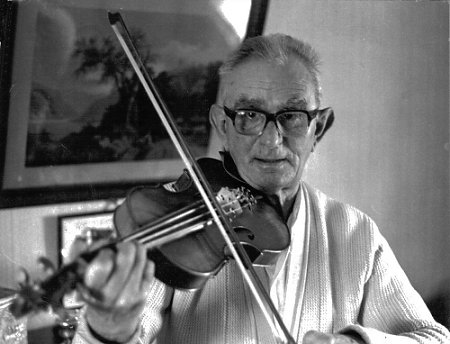 I was born on the road
When my mother was hawking pegs
I've been a roving Gypsy
Since I learned to use my legs.
All I ask for is to wander
And to let the world go by
And I'll be a roving Gypsy now
Until the day I die.
Chorus:
Just give me the open road,
Let me travel to the end
Let me see around the corner,
Let me wander round the bend.
With me waggon and my horses
And my kiddies and my wife
And I'll be a roving Gypsy
Until I wear up my life.
They tell me I should change my ways
And learn to settle down
It would choke me in the factory,
It would cage me in the town.
Oh let me live in open country,
Let me see a starry sky
And I'll be a roving Gypsy now
Until the day I die.
I can catch myself a rabbit,
I can catch myself a hare
And a partridge or a pheasant
I can find them anywhere.
For the way I get my living
The city never understand
For no matter where I wander
I can still live off the land.
Just give me the open road,
Let me travel to the end
Let me see around the corner,
Let me wander round the bend.
With me waggon and my horses
And my kiddies and my wife
And I'll be a roving Gypsy
Until I wear up my life.
A wild rabbit you can never tame,
He's born to wander free
And like the roving seagull
He's a roamer same as me.
All they ask for is their freedom now
Just the same as I
And I'll be a roving Gypsy now
Until the day I die.
Just give me the open road,
Let me travel to the end
Let me see around the corner,
Let me wander round the bend.
With me waggon and my horses
And my kiddies and my wife
And I'll be a roving Gypsy
Until I wear up my life.
That's it boy.
1 - 33 Talking
Harkie Nesling and Fred 'Pip' Whiting: Bedfield 1975
KS: “Do you know any dance tunes?”
HN: “Dance Tunes. Oh I can't - I used to - I know scores but I can't play 'em now. They're a little too much for me now ...”
FW: “...You can't go on beating Old Father Time all the time. He just can't get round the corner quick enough.”
HN: “When you get to 85 that take a bit of doing.”
KS: “Yeah, you're doing well ...”
HN: “Still I don't mess about or get nervous, you know. I'm not a bit nervous at all. No, no, I can play in front of as many people as you like, it don't make no difference to me. Don't affect me one bit. I've played in front of a doctor, played in front of nurses, and all these here people I've played in front of, and I don't pay any attention to it at all. No. But I just can't play the quick tunes like this young gentleman here. My fingers won't go.”
FW: “I've never realised before what stage fright is. Now I've played in pubs, I've played everywhere, but playing in front of that damn thing (microphone) ... I couldn't play for toffee! I couldn't play half of well as what I can play ... and I was surprised at myself!”
HN: Laughs. “Yes, that's the way it is isn't it.”
*1 - 34 Polka (Jingle Bells?)
Harkie Nesling (fiddle): Bedfield 1975
We rather wonder if this is Jingle Bells at all - and if you were asked to play a polka, which we know Keith did ask for, would you play Jingle Bells? It may, in fact, be a simplified version of another polka tune called Jack’s Life; Eley Went played it as well.
1 - 35 Australia (Roud 1488)
Cyril Poacher: The Ship Inn, Blaxhall c.1971
Come all you young fellows, wheresome ever you may be
Come listen, I'll tell you a story.
When I was a young man and about seventeen
I ought to have been serving Victoria our queen.
But those hard hearted judges, oh how cruel they've been
To send us young lads to Australia.
You should see how they stand with their whips in their hand
They drove us like horses to plough up the land.
You should see us poor young fellows
We worked in that jail yard
How sad was our fate in Australia.
Australia, Australia, I shall never see no more
I'm worn out with fever, cast down at death's door.
But if ever I should live to see seven years more
I will bid them adieu to Australia.
Cyril and his neighbour Bob Hart both had this song. Cyril learned it from Bob Scarce, who probably learned it, as did Hart, from Walter ‘Yinka’ Friend - with whom both of them worked for many years in Snape Maltings.
Cyril Poacher: “Walter was a damn good singer and he played the tin whistle too. He was the first one to sing Green Bushes and Australia.”
It is one of a considerable number of transportation songs in the traditional repertoire, but is unusual in the nature and motive of the crime - highway robbery, 'to keep her like a lady'. More often it's poaching - brought about by necessity. Contrary to certain record sleeve-notes, the song owes little to Van Dieman's Land, but is clearly derived from a much earlier song called Virginny (a fragment of which was collected from Mrs Goodyear, of Ashford, Hants by George Gardiner in 1907), with the transports' destination having been changed to Australia when this became current (i.e. post 'First Fleet'). This explains why the song is unusual; in the 18th century highwaymen were transported to Virginia - in the 19th they were topped!
Other recordings on CD: Bob Hart (MTCD 301/2); Cyril Poacher (MT CD 303).
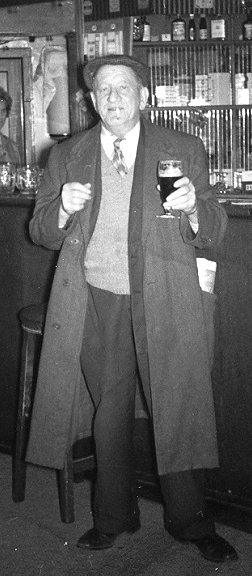 1 - 36 The Female Drummer (Roud 226)
Bill 'Dodger' Brabbing: Hare & Hounds, Framlingham 1975
The company call for 'Dodger'.
Now when I was a young girl
At the age of sixteen
I left my home and parents
To go and serve the Queen
I enlisted in the army
Just like another man
And very soon they learned me
To beat upon the drum
To beat upon the drum,
To beat upon the drum
And very soon they learned me
To beat upon the drum.
Now going to bed at night
I used to often smile
To think myself a drummer
Yet a female all the while
Yet a female all the while ...
They took me up to London
To guard the London Tower
That is where I should have been
This very day and hour
If not for a young damsel
Who fell in love with me
And straight way to my officer
My secret she betrayed
My secret she betrayed ...
The officer he came to me and he wants
To know if it's true
For the same I says to the officer
And the same as I says to you.
“Here’s a pension for your bravery.
And should we ever want a drummer again
We'll send for you!”
Yet another song far more popular in the revival than in the oral tradition - only 26 named singers among Roud’s 81 entries, with examples from England and Scotland being almost equally numerous, and making up the vast majority if the sightings. This is the only instance from Suffolk.
Other recordings on CD: Mary Ann Haynes (Topic TSCD 661); Walter Pardon (TSCD 514); Harry Cox (Topic TSCD 512D).
1 - 37 The Sailor’s Hornpipe
The Peacock Band: The Peacock, Chelsworth c.1972
An old tune which everyone knows by this name, and everyone knows is really called the College Hornpipe! Universally a favourite tune for step-dancing.
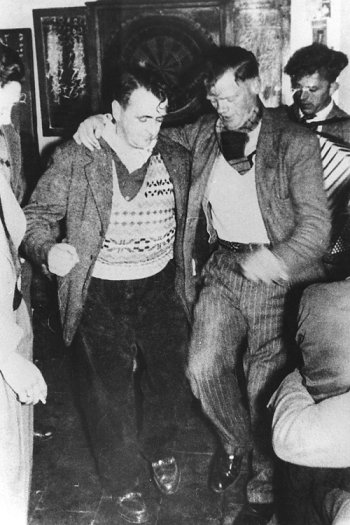 *2 - 1 Truly Fair
Font Watling (melodeon) and Wattie Wright (stepping): Worlingworth Swan 1977
This popular song was written by Bob Merrill and sung by Guy Mitchell in 1952. Between 1950 and 1960 Mitchell had nearly 40 hit records, most of them novelties, folk tunes and country songs and he became a household name in UK.
*2 - 2 The Recruiting Sergeant (Roud 493)
George Ling: Croydon 1975
As I was a walking down Newry one day
I met a recruiting seargeant, he was beating my way.
He took me and enlisted me, and the bargain was made.
And the ribbons they were bought
And pinned to my cockade.
Now the first time I deserted I thought myself free
Until my cruel comrades they informed against me.
I was quickly followed after,
Brought back by great speed
I was handcuffed and guarded, heavy irons on me.
Court martial, court martial, I very soon got
When the sentence was read over me
I was to have been shot.
May the Lord have mercy upon my soul
For a sad cruel crime
And if ever I get over it I will never do it again.
Then up rode Prince Albert in his chariots of six
“Bring me forth that young man
Whose life has been fixed.
Release him from his irons and let him go free
He will make a fine soldier for the King and country.”
Laughs.
KS: “That's a good one, that.”
GL: “It isn't bad, if you get it right.”
Several versions of this song appear in the Greig-Duncan Collection but, beyond that, it appers to be known only in southern England. Apart from Wiggy Smith and Walter Pardon, George is the only other singer of The Deserter, as it’s more usually called, cited in Roud. Not only, that, but he’s the only singer from Suffolk and, as the song is not mentioned in Keith’s Sing, Say, or Pay! text, we may assume that he learned it in his travels outwith the community.
Other recordings on CD: Wiggy Smith (Musical Traditions MTCD307); Walter Pardon (Topic TSCD 514).
*2 - 3 Strolling down to Hastings (Roud 364)
Aileen Stollery: Hare & Hounds, Framlingham 1975
Husband: “Do your best, you might get to Hollywood now!” Cheering.
Husband: “Don't forget, I'll come with you if you go!” Laughter.
While strolling down to Hastings
On one fine market day.
There I spied a pretty fair maid
With bacon and eggs and whey.
“Although you may not see it”,
I unto her did say
“For my lassie your garter is coming untied”
With a fol the doodle i day - Repeat.
“Oh thank you sir, oh thank you sir,
Oh thank you sir”, cried she
“And if you've no objection
Please tie it up for me.”
Whilst tying up her garter sights I ever did see
And we both went rolling together my boys
With a fol the doodle i day - Repeat.
Now we strolled along to yonder tree
Where the grass it grew so high
Now he said, “My pretty fair maid,
Your garter for to tie.”
Whilst tying up her garter sights I ever did see
And we both went rolling together my boys
With a fol the doodle i day - Repeat.
AS: “Have you got that?”
Husband: “Is that the one you want? Did you want the other one, did you?”
More usually known as The Aylesbury Girl, Roud has 43 instances of this song, including 13 sound recordings. The fact that none of them come from anywhere near Berkshire may account for the variety of ways singers have pronounced the town name; Hazelbury, Happisburgh, Hastings, Salisbury and even Derby feature in some versions. Alternatively, since the earliest broadsides use this name, it may originally have been in Hazelbury in Dorset that the song was based.
Other recordings on CD: Jack Goodban (Musical Traditions MTCD311-2); Pop Maynard (Topic TSCD 665, MTCD401-2); Bob
Hart (MTCD301-2).
*2 - 4 Chinaman (Roud 1850)
Aileen Stollery: Hare & Hounds, Framlingham 1975
Husband: “You want that Chinese one?”
AS: “Stollery, what about that one; Down in the Fields where the Buttercups Grow?”
Husband: “Yeh, sit you down.”
The company call for Chinaman.
Husband: “You've got a good man behind you.”
Now in China once there lived a great man
His name was chigger lacker chee chi chang
His legs were long and his feet were tall
The Chinaman couldn't walk at all.
Chigger racker chee chi chow chigger lawrm
Upon my oorum necky nicky wan
Oko, oko, ditty, ditty pot,
Why ditty pie, ditty pie, shanko.
Now they took him up to top of the hill
They knocked him down with a red hot pin.
Chigger racker chee chi chow chigger lawrm
Upon my oorum necky nicky wan
Oko, oko, ditty, ditty pot,
Why ditty pie, ditty pie, shanko.
I met an Indian lady who stood about six foot high
Colour of her hair was sky blue pink,
She only had one eye.
I asked her if she'd marry me to be my lawful wife
For I wonder what my mother would say
If I took home an Indian wife.
For they say camaran arimbo larbo jibbero just a monger
Abber jabber gee, abber jabber gee,
Funny old down the coal hole.
With a ring time, ring time, singing all the day,
If you were there you'd never understand a word they say.
With a ring time, ring time, drop it in your hat,
Ring time, ring time, drop it in your hat, once more!
Cheering.
The only other recording of this nonsense song in Roud comes from Harry Stubbs of Harrogate, Yorkshire - all the other 16 instances are from broadsides.
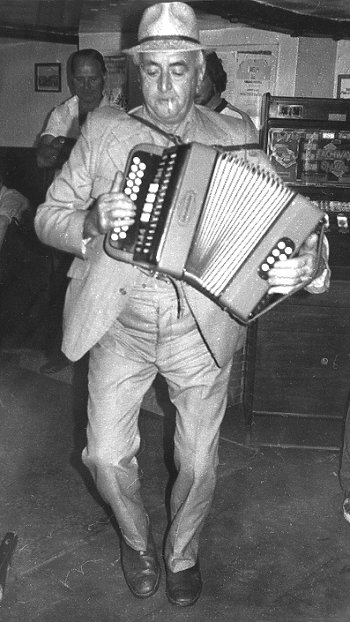 *2 - 5 Pigeon on the Gate
Font Watling (melodeon) and Wattie Wright (stepping): Worlingworth Swan 1977
Pigeon on the Gate is the name commonly given to what was probably the most popular step-dancing tune in Suffolk. Originally published as both Rickett's Hornpipe and the Manchester Hornpipe; another local name, the Yarmouth Hornpipe, is also found far beyond East Anglia. The words 'pigeon on the gate' fit the second part of the 2-bar rhythmic phrase which runs through traditional versions, and may preserve a piece of mnemonic doggerel.
*2 - 6 The Lobster (Roud 149)
Percy Ling: Snape 1975
“Good morning Mr Fisherman.”
“Good morning”, said he.
“Have you a lobster you can sell to me?”
Singing roll tiddly oll, roll tiddly oll,
Roll tiddly oll tiddly toll toe.
“Oh yes”, said the fisherman, “I've got two”.
“One is for you and the other is for me”.
Singing roll tiddly oh ....
I took the lobster home,
I put it in a dish
I put it in a dish
Where the missus used to whiss.
Singing roll tiddly oh, ....
First I heard a grunt
And then I heard a scream
There was the lobster
A-hanging on her front.
Singing roll tiddly oh ....
The missus grabbed a brush and
I grabbed a broom
We chased that blooming lobster
Around around the room.
Singing roll tiddly oh ....
Now the moral of this story,
The moral is this
Always have a shufti
Before you have a whiss.
Singing roll tiddly oh ....
An extensive study of this old song appears in Musical Traditions as Dungheap No.13 - The Sea Crabb. Dungbeetle writes: ‘Probably the most widespread and oldest bawdy ballad which still thrives today is The Crabfish / Lobster Song ... It was with great interest I found the sixteenth century version in the Percy Folio Manuscript ...’ Clearly is has survived well for 400 years, since Roud includes 22 recorded versions from all over England.
Other recordings on CD: Nora Cleary (Topic TSCD657); George Bregenzer (Veteran VTC6CD); Dan Tate (Musical Traditions MTCD321-2).
*2 - 7 Old General Wolfe (Roud 624)
Alec Bloomfield: Newark, Nottinghamshire 1975
Old General Wolfe to his men did say
Come come my lads to follow me
See yonder cliffs oh they look so high
Through smoke and fire, through smoke and fire
There lies the path to victory.
All for the honour, all for an honour
All for a King and the country.
You see brave men on the hill so high
While we poor lads in the valley lie
You see them fall like gnats in the sun
Through smoke and fire, through smoke and fire
They're falling to our frigate guns.
All for the honour, all for the honour
All for a King and a country.
Now the first volley that they gave to us
They hit our Wolfe in his left breast
And he lay bleeding no more to stand
Saying, “Fight on so boldly, fight you on so boldly
For while I live I shall give command.”
All for the honour, all for the honour
All for a King and a country.
In my left pocket and in my chest
My money and jewels there lie at rest
Divide this money this jewels and gold
Drink to me boldly, drink to me boldy
It is no good when the blood is cold.
All for the honour, all for an honour
All for a King and a country.
Now when to old England you do return
Go to the village where I was born
Say unto my old mother dear
“Weep not for me, weep ye not for me
A soldier's death I had wished to share.”
All for the honour, all for the honour
For the second George and the country.
There you are.
Alec might have learned this ballad from a number of sources - in the neighbourhood, Bob Scarce, Aaron and George Ling, George Bloomfield, Bob Hart and Cyril Poacher all had it in their repertoires.
One of several songs on Wolfe, it was common on 19th century broadsides, from about the 1830s. Roud has 76 instances, almost all from the south of England and, with about half a dozen exceptions, all from Suffolk or Sussex. The Copper family, Pop Maynard and Shepherd Haydon all sang it. It has also been noted in Canada, the USA, but not in Scotland or Ireland.
Other recordings on CD: Bob Hart (Musical Traditions MTCD301-2); Cyril Poacher (MTCD303); Jim Copper (Topic TSCD 534).
2 - 8 A Broadside (Roud 492, Laws N4)
Bob Scarce: The Ship Inn, Blaxhall c.1971
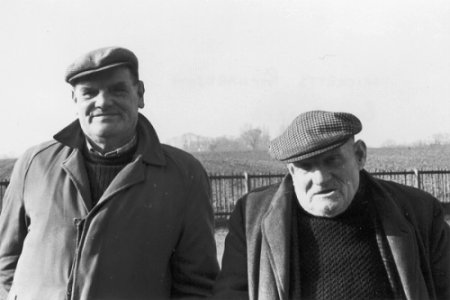 As we sailed out one ...
"Order!"
... morning along the Spanish shore.
Where the drums they did beat
And the cannon they did roar.
We spied aloft the Admiral
Come ploughing on the main
And which caused us to hoist up
Our topsail again.
Come come my lads get ready,
Come come my lads be true.
To face this French Admiral
That's all that we can do.
If he should overtake us,
All on the ocean wide.
We will nearly draw up to him
And give him a broadside.
Now a broadside, a broadside,
And at it we went
For killing one another
That was their full intent.
The very second broadside
Our Admiral he got slain
And a young damsel stepped up
In his place to remain.
“Four quarters, four quarters”,
This damsel replied
“We'll give you the best of quarters
That ever we can afford.
And we'll offer you the finest quarters
That ever we can afford.
You must fight, sink or swim my boys
Or else jump overboard.”
Now we fought there four hours,
Four hours severe
We fought till there was not a man
He could stand on board.
We fought till not a man on board
Could fire off a gun
And the blood from our quarterdecks
Like water did run.
And now we are gained a victory
We'll take a glass of wine
You drink luck to your true love
And I'll drink luck to mine.
But there's good luck to the damsel
Who's fought with us on the main
To our good ship The Royal
Called Rainbow by name.
“Good old Bob!”
The young girl who disguises herself as a man in order to follow her sweetheart to sea is a popular theme in folksong. This example, collected in England, Scotland, USA and Canada, though not very common on broadsides, is generically known as The Female Warrior. It's also sometimes called The Rainbow, for its last verse, just to confuse it with Captain Ward! Harris of Birmingham printed a broadside on this theme but, inexplicably, omitted the usual introductory verses. The result was our present song - copied by later printers - and the girl's sudden and unexplained appearance has confused numerous listeners.
Both Bob Hart and Cyril Poacher learned it from Bob Scarce, but the Poacher and Hart versions have diverged noticeably in a generation.
In her book Warrior Women and Popular Balladry 1650 - 1850, Cambridge UP, 1989, Dianne Dugaw claims that the female warrior was a popular subject in balladry in the seventeenth and eighteenth centuries. She has identified more than 100 ballads on the subject.
Other recordings on CD: Bob Hart (Musical Traditions MTCD301-2, Topic TSCD 658); Cyril Poacher (MTCD303,Topic TSCD 652).
2 - 9 Unidentified Tune
George Woolnough (melodeon): Saxmundham c.1971
This seems to derive ultimately from the familiar Scottish tune Cornrigs.
2 - 10 The Flower of London (Roud 548, Laws M19)
George Dow: Saxmundham, 1977
It was of a rich merchant in London did dwell
He had only one daughter such a beautiful girl.
Forty thousand bright guineas was her fortune we're told
Until she fell in love with a young sailor bold.
As soon as her father these tidings did hear
Upon this young man he had ventured to snare
Saying “No more shall your true love go and plough the salt sea
For before tomorrow morning his butcher I'll be.”
So a suit of fine sailor's clothes she found out complete
And she dressed her own self from the head to the feet.
With a ring on her finger and a cane in her hand
She met her honest William as she marched down the strand.
“Oh William, oh William, oh William, my dear
My father, cruel father, sought your life in despair.
So straight away to Dover I will have you appear
And in less than forty-eight hours, I will meet you there.”
As she was a walking home down on the strand
She met her own father, saying, “You are this man.”
And a sword from his side he then instantly drew
And her beautiful body he pierced it right through.
As soon as her father saw that it was she
His lips they did tremble and his eyes scarce could see.
Saying, “Wretched cruel monster, oh what have I done?”
I have murdered my only daughter, the flower of London.
As soon as young William these tidings did hear
He died broken hearted in grief and despair.
There was father and daughter and a young sailor bold
All died an untimely death for the sake of bright gold.
More often called The London Merchant, this song is frequently confused with several others which start in much the same way, but then diverge; The Old Miser (Roud 3913), The Silly Young Maid (Roud 17190), and the much more well-known Silk Merchant’s Daughter (Roud 552).
We don’t know where George Dow learned the song, but Jumbo Brightwell told Keith: ‘Percy Smith from Walberswick sang The Flower of London ... then I heard a bloke, Will Whiting, he came from Dennington way, sing it. He kept the Mill here in Leiston and I used to go round and drink his home-made wine, and I soon picked it up.’
Other recordings on CD: Jumbo Brightwell (Neil Lanham NLCD3). As The Old Miser: Mary Ann Haynes (Musical Traditions MTCD320); Chris Willett (Topic TSCD 654).
*2 - 11 The Indian Lass (Roud 2326)
William 'Jumbo' Brightwell: Leiston 1975
Now as I was a walking down a far distant shore
I walked into an alehouse to spend half an hour.
And whilst I sat smoking and all taking my glass
By chance there stepped in a young Indian lass.
She sat down by the side of me and she squeezed my hand
“You are a young sailor not one of this land.
I have got good lodgings if along with me you'll stay
While my fortune I will share it without no delay.”
So with a drop of good liquor boys she welcomed me in
And all that night long this was her tune.
And all that night long, my boys, why this was her tune
“You are a young sailor so far from your home.”
Now we tossed we tumbled into each others arms
I embraced this charming damsel; I embraced her sweet charms.
A night of enjoyment ‘til the time passed away
I did not go and leave her until nine that next day.
Now the day being appointed for our ship to set sail
This loving young Indian on the beach did revail.
When I took my handkerchief and all wiped her eyes
“Oh do not go and leave me young sailor.” she cried.
Now we whipped up our anchor, straight away we did steer
We'd a fair and a pleasant breeze which soon parted our view.
And if ever I get over, and sat a taking my glass
I will drink a success to this young Indian lass.
Indian lass.
This lovely song was widely known in many parts of England, the USA, Canada and even a couple of versions from Ireland. A Midlands version has the following wonderful final verse:
And now I'm safe landed on my own native shore,
My friends and relations all round me once more;
There's none that goes by me, none that comes past
Is fit to compare to that young Indian lass.
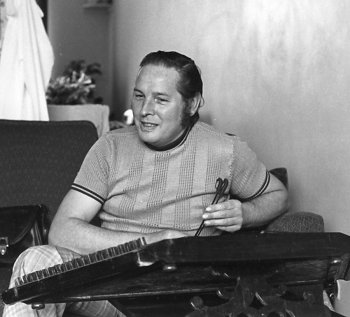 *2 - 12 Oscar Woods' Waltz / Charlie Philpott's Waltz
Reg Reeder (hammered dulcimer): Leiston 1978
Reg is Charlie Philpott's grandson and was taught to play the dulcimer by Charlie. The first waltz is Waltzing Over the Water. At least, that's what Geoffrey Ling named it as, but that's unconfirmed from any other source. Oscar's own name for it was The Italian Waltz, a name he made up. The second waltz (Charlie Philpotts') is Il Bacio (The Kiss), composed in 1863 by Luigi Arditi. Others, like Scan Tester, also played it.
*2 - 13 Out with my Gun in the Morning (Roud 1847)
Jimmy Knights: Little Glemham 1974
Now I like my jovial country life
Happy at home with my home and wife.
Some people are rich but I envy none
I'm rich enough with my dog and gun.
Early in the morning I leave my home
That is the time in the fields to roam.
Down in the valley my house you'll see
Folks say it's small but it just suits me.
Chorus:
Then I like my wife, my pipe and my glass
Gaily along life's road do I pass.
Jolly and free it just suits me
And out with my gun in the morning.
Oh I'd lie in bed when the lark sings high
up in the blue and cloudy sky.
Gay as a bird to the fields I go
Back I'll return with the sunset glow.
My dear little wife as she crossed the stile
She welcomed me home with a loving smile.
Perhaps other women would fairer be
But she is my own and she just suits me.
Then I like my wife ...
Now the winter may come and the winds may blow
Safe at home from frost and snow.
By my fireside with my wife I'll sing
I would not change with a crowned king.
Happy am I in my little cot
Contented I'll be with my humble lot.
Some people may sneer at my low degree
They say I'm poor, but it just suits me.
Then I like my wife ...
JK: “Did I tell you where I got it from?”
KS: “No. Who from?”
JK: “Charlie Baldry!”
KS: “Did you?”
JK: “I did.”
KS: “Is that one you learnt off him?”
JK: “No. The old man writ that out for me.”
KS: “Did he?”
JK: “Yes, when they lived in Bredfield.”
KS: “Yeah? And how old would he have been?”
JK: “Oh, he was bloody near eighty when he writ that out.”
KS: “Was he?”
JK: “Poor old bugger used to stand up and try to sing it. Laughs.” Everybody wanted him to sing it, you know. And a ... he didn't write it out. His daughter did for me.”
KS: “He didn't live in Melton then?”
JK: “No. Old Charlie? You didn't know him?”
KS: “No.”
JK: “No. Blast you wouldn't know him boy. He was dead before you was bloody well born. Yes.”
Apart from Alfred Williams’ inclusion in his MS of this song from a Mrs Phillips of Burton, Wiltshire, the only other singers cited by Roud are Charlie Baldry’s son Jim, and Jimmy Knights! And the only broadside listed is that in the G R Axon Collection, Chetham's Library, Manchester - so this is a very rare song.
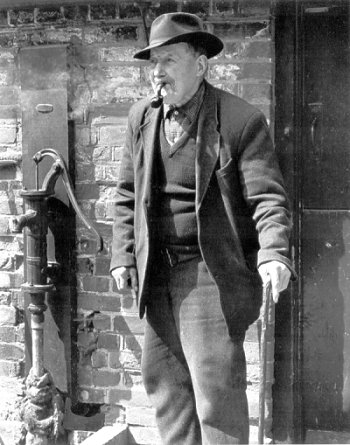 2 - 14 Talking
Jimmy Knights: Little Glemham 1974
JK: “Yes well they all sing the - they all sing the same old songs.
KS: “Do you know any of those songs that they sing? Give us one of those.”
JK: “No. I don't know what they sing. They don't know what I know you see! No. You can always keep singing them old songs over and over again but you ought to sing some what you never heard!”
KS: “That's right yeah. Can you give us another one?”
JK: “Yes, I think I can.”
*2 - 15 Duckfoot Sue (Roud 9553)
Jimmy Knights: Little Glemham 1974
Now come listen for awhile
And I will sing to you
About a girl I love
And her name is Duckfoot Sue.
She's gentle and divine,
Long-waisted in the feet,
Her heels stick out behind
Like an eighteen-carat beet.
Chorus: And I will sing to you
All about my gal so true
She's chief engineer
In a white shirt laundry
Out in a back-yard view.
Her beauty was all she had.
She'd a mouth as large as a crab,
She'd an India-rubber lip
Like the rudder of a ship,
And I tell you she was mad.
Now I took her to a ball,
At a fat thin social club,
And it cost me half a quid
To get her filled up with grub.
For she was a funny old guy,
With a double-barrelled squint in her eye.
And her number-ten feet
Would cover up the street.
She'd a mouth was like a crack in a pie.
Now she was not very fat
She was not very thin.
But when she was dressed up she was like
A straw in a barrel of gin.
She'd a cheerful cemetery laugh,
She'd a head like a Mexican calf.
She was like an iron-clad gunboat
Clipper-built from the rig
With a ball on her maintop gaff.
And I will sing to you
All about my gal so true
She's chief engineer
In a white shirt laundry
Out in a back-yard view.
Her beauty was all she had.
She'd a mouth as large as a crab,
She'd an India-rubber lip
Like the rudder of a ship,
And I tell you she was mad.
Bugger, I wrote that out for a bloke at Lowestoft. A landlord at Lowestoft. He give me a quid for writing that out. He did.
This bizarre song was written by Harry Bennet in 1884, and sung by G W Hunter. It was also sung, later, by George Foster (1864-1946), who may have recorded it. There are only two other published recordings of this song from these islands: a rather incomplete version sung by an unknown singer in The Royal Oak, Milton Street, Sussex, on 27.5.60. Brian Matthews happened to be there, so the recording appears on the Musical Traditions CD Just Another Saturday Night. The other one was made by the BBC at Eastbridge Eel's Foot in 1938 or '39, when Harry 'Crutter' Cook sang it. This recording recently resurfaced on the Veteran CD Good Order! (VT140CD), and it appears that the song had some East Anglian popularity, as both Keith Summers and Neil Lanham recorded it there and Ginette Dunn cites it as being in Ruby Ling's repertoire.
2 - 16 Talking
Jimmy Knights: Little Glemham 1974
JK: “...Go round these little old country places and sing the bloody old songs what I used to sing eighty year ago. That ain't no bloody good. 'Course they like old uns, though. They like those.”
KS: “Yes They're the ones they go for. The real old ones - aren't they.”
JK: “Yes.”
KS: “You don't sing any songs like that then?”
JK: “No.”
KS: “That poaching song was old though wasn't it. The first one you sang. That was an old song?”
JK: “Gor blast I should think it was. I used to sing that when I was about twelve year old. Yeah.”
KS: “Where did you learn all your songs from?”
JK: “Well my people were all singers and ...”
KS: What your family?
JK: “Yeah.”
KS: “Did any of them play music?”
JK: “Yes, my sister was a music teacher.
KS: “Was she?”
JK: “Yes. You don't remember them coming out in the News of the World, do you? In the News of the World every Sunday there was a different song in there every time, every Sunday.
KS: I think Percy Webb told me that, yeah. He used to collect 'em. Keep them all in a book.
JK: “Yes, well eh, my sister used to, she used to see them in the paper. 'Course the music wasn't with 'em. Then she used to send to London and get it, you see. To the News of the World and get 'em. Play it over twice with me singing it and I knew it. I'd get hold of a song after she'd played it about once or twice.”
KS: “Yeah? You could learn it as quickly as that.”
JK: “Yeah.”
*2 - 17 Wormwood Scrubs (Roud 21231)
Jimmy Knights: Little Glemham 1974
Now there is a bloke whose name is Curly Williams
Who never had a penny in his sky1
He wasn't fond of work because it hurt him
If you spoke about a job he used to sigh.
He used to loaf about outside the public houses
And each day he'd scarcely anything to eat.
His clothes was always nicely ventilated
And he lived in a little hovel up the street.
Chorus:
But he's moved in a bigger house now
Living like a great big Don.
In a great big large five storey house
With a real bathroom and the gas laid on.
Lovely grounds all around it
No longer will he mooch around the pubs.
For it ain't a villa or a mansion
Where he's living in
They call it Wormwood Scrubs.
Now a gentleman that Curly owed a quid to
Was knocking where he used to live this morn.
He said that he would give me two and sixpence
If I could tell him where he'd gone.
I said now why do you want to find him?
To summons him he murmured with a frown.
So I thought there'd be no harm for me to tell him
So I answered when I'd got his half-a crown.
Why he's moved in a bigger house now ...
Now on Monday last his landlord came to see him
And he said for rent he owe a lot of tin.
He said if he could find out where he'd moved to
He would follow him and shove the brokers in.
I said the way he's treated you is shameful
It's certainly a dirty bit of biz.
And you want to put the brokers in now do you?
Well if you'll listen I will tell you where he is.
Why he's moved in a bigger house now ...
JK: “Have you heard that afore?”
KS: “No.”
JK: Chuckles. “They're the buggers you want to get a hold of. What you've never heard!”
1 Rhyming slang: sky rocket = pocket.
Wormwood Scrubs prison, West London, was built between 1875 and 1891. In 1902 the last female prisoner was transferred to HMP Holloway. In 1922 one wing became a borstal. During World War II the prison was used by the War Department. In 1994 a new hospital wing was completed and in 1996 two of the four wings were refurbished to modern standards, and a fifth wing completed.
2 - 18 Phil the Fluter
Tommy Williams (mouthorgan): Nr. Chelsworth 1972
Phil the Fluter's Ball is just one of a number of Percy French songs which struck a popular chord.
2 - 19 Paddy and the Rope (Roud 2037)
Billy List: Brundish 1977
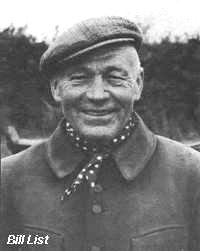 There was once two Irish labouring men;
To England they came over;
They tramped about in search of work
From Liverpool to Dover.
Says Mick to Pat, “I'm tired of this;
We're both left on the lurk;
And if we don't get work, bedad,
We'll go and rob a church.”
“What, rob a church?” says Mick to Pat;
“How could you be so vile?
Sure something bad will happen
As we're strolling up the aisle.
But if you'll go I go with you;
We'll get out safe, I hope;”
So, listen, and I'll tell true
How Paddy stole the rope.
So off they went with theft intent,
The place they wanted finding.
They got into a village church,
Where nobody was minding.
They scraped together all they could
And then prepared to slope,
Ah says Pat, 'Hold on now, Mick,
What shall we do for rope?
We have no bag to hold our swag,
Or e'er we go outside,
Surely something stout and strong,
The bundle must be tied.”
So then they spied the church bell rope,
So swift as antelope,
They scrambled to the belfry high
To try and steal a rope.
So, like a sailor, up he went,
I'm near the end, said he,
“I think the piece that's underneath
Quite long enough will be.”
So, holding on by arm and leg,
He took his clasp knife out,
Then right above his head an end
He cut that rope so stout.
He quite forgot it held him up,
So, by the powers of soap,
Down to the bottom of the church
Fell Paddy and the rope.
Says Mick to Pat, “Come out of that”,
W3hile he on the floor lay moaning,
'That's not the way to steal a rope,
No wonder now you're groaning.
I'll show you how to steal a rope,
So just lend me the knife.”
Ah says Pat, “Be careful Mick,
Or else you'll lose your life.”
Mick bounded up the other rope,
And, like an artful thief,
Instead of cutting it above, he cut it underneath.
The piece fell down and he was left
To hang up there and mope;
“Bad cess unto the day”said he,
“When we came stealing rope.”
Now as Paddy on the floor lay moaning
While Mick hung up on high,
“Come down.” says Pat. “I can't,” says Mick,
“For if I drop, I'll die.”
The noise soon brought the beadle round,
The sexton and police,
Although they set poor Micky free,
The pair got no release.
They took them to the station
Where the conduct now they rue,
And if they had no work before,
They have plenty now to do;
And with their ingenuity they have a larger scope
Than when they broke into the church
And tried to steal the rope.
Tried to steal the rope.
Keith Summers wrote: ‘Bob Scarce’s most popular song was Paddy and the Rope, about two hapless would-be church robbers. I would guess I heard Bob sing this on three occasions, and each time, Fred List's brother Billy, who accompanied the Framlingham crowd, was there. A few months later I heard Billy List sing Paddy and the Rope in Dennington Bell - after which he turned to me, winked, and said “Got it in the end”.
2 - 20 The Oak and the Ash (Roud 269)
Charlie Whiting: Brundish 1977
 Now John was a sailor, a sailor on the main
He earned a good living and captured a good name.
He was lying in the harbour three months for to stay
And it was there he fell in love with his Polly so gay.
Chorus:
Singing home dearest home over there let me be
Far far away from the old country
Where the oak and the ash the bonny ellum tree
They were all a growing green in the north Amerikee.
Now she jumped into bed without the least alarm
Thinking that the sailor boy won't do her any harm.
He huddled her he cuddled her the whole night through
And she only wished the night had been
Seven times as long.
Singing home dearest home ...
Now John rose early the next morn
He into Polly's apron threw handfuls of gold
Saying take this for the mischief I have done
For this night I've left you with a daughter or a son.
Singing home dearest home ...
Now if it be a daughter well put her out to nurse
Silver in her pocket and gold in her purse
But if it be a boy he'll wear the jacket blue
And he'll dance upon the deck there
As his daddy used to do.
Singing home dearest home ...
Now all you young maidens this warning take by me
And never trust a sailor boy an inch above your knee.
'Cos I trusted one he's been the ruin of me
And he left me with a baby boy to prattle on my knee.
Singing home dearest home ...
Now all you young fellows this warning take by me
And never build your nest upon an old bay tree.
For the leaves they will wither the fruit it will decay
And the beauty of these pretty girls will soon fade away
Singing home dearest home ...
Will that do? Laughs.
The cautionary tale of a decamping sailor who leaves provision for the fruit of his one-night encounter is told in this song, also known as Rosemary Lane, Bell-bottomed Trousers or Home Dearest Home. This is a very popular song with 163 Roud entries, including 34 sound recordings. Most are from England, plus a good many from the USA and two dozen from Scotland. Other singers from Suffolk are: Jumbo Brightwell, Edgar Button, Percy Webb, Ted Chaplin, Jack Tarling and Charlie Stringer.
Other recordings on CD: Jack Arnoll (Musical Traditions MTCD309-10); George Dunn (MTCD317-8); Jumbo Brightwell (Topic TSCD 652, Lanham NLCD3, TSCD652); Chris Willett (TSCD661); Lucy Woodall (Veteran VTC7CD).
2 - 21 Sailor's Hornpipe
George Woolnough (melodeon): Saxmundham c.1971
Another version of that old tune which is really called the College Hornpipe.
2 - 22 Lamplighting Time in the Valley (Roud 13304)
Cyril Poacher: The Ship Inn, Blaxhall 1972
There's a lamp shining bright in a cabin
In a window it's shining for me.
And I know that my mother is praying
For the boy that she's longing to see.
When it's lamplighting time in the valley
Then in dreams I go back to my home.
I have sinned against home and my loved ones
But still I can never more roam.
When it's lamplighting time in the valley ...
In the shadows of night I can see her
WR: Order please!
As she rocks in her chair to and fro.
Though she thinks that I'll come back to see her
But still I can never more go.
When it's lamplighting time in the valley
And the shadows of night they gently fall.
It is then that I long for the valley
And I miss you Mother dear most of all.
When it's lamplighting time in the valley ...
So she lights up that lamp and sits waiting
For she knows not the crime I have done.
So I'll change all my ways and I'll meet her
Up in Heaven, when life's race is run.
When it's lamplighting time in the valley
Then in dreams I go back to my home.
I can see that old lamp in the window
Will guide me where ever I roam.
When it's lamplighting time in the valley ...
This is an American country standard, and Cyril’s is the only recording form the English tradition. Ola Belle Reed recorded it for Rounder, and on the recently re-released CD version (Rounder CD 0077) with additional material, it is splendidly sung by her son, David Reed.
The sleevenotes tell us ‘Lamplighting Time in the Valley: Written by Herald Goodman and performed on the Grand Ole Opry by the Vagabonds in 1932, this song quickly passed into tradition. By 1936 it was recorded by a Library of Congress fieldworker in Crossville, Tennessee (3174 A2), and it has since been recorded by many professional groups.’
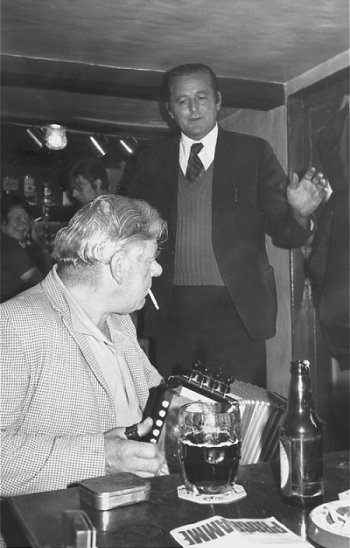 *2 - 23 Step Dance Tune
Oscar Woods (melodeon) and unidentified stepdancer: Saxmundham c.1971
This is a version of the Bristol Hornpipe; one of the most popular stepping tunes up the road in Norfolk, but not found so often in Suffolk. It is seldom recorded under it's own or any other name. Traditional musicians usually improved upon the monotonous B music, or rejected it completely. Oscar Woods was not alone in playing short rhythmic phrases based on the A music to fill the gap.
2 - 24 Pretty Little Mary (Roud 899)
Percy Ling: The Ship Inn, Blaxhall 1972
PL: “Are you going to do a bit of singing?”
CP: “I asked you to sing. It was my call.”
Crowd: “Pretty Little Mary.” “It's the singer's call.”
WR: “Order Please!”
Pretty little Mary was sweeping up the room
She untied her apron strings to get a bit of room.
In come the master and undo her did say:
“What is that you've got underneath your apron?”
“Oh master, oh master, oh master” cried she,
“It's only a muslin gown my mother gave to me,
I had nowhere to keep it, to keep it nice and warm
So I tucked it snugly underneath my apron.”
A few months later a baby boy was born
Born without a father, without a home at all.
In come the master and undo her did say:
“Now I see what you had underneath your apron?”
“Was it by a tinker or was it by a clown,
Or was it by a soldier-boy
Who fought for England's crown?”
“No it was by a sailor who rowed the angry sea.
And he tucked it snugly underneath my apron.”
“Oh, was it in the kitchen, or was it in the hall?
Was it in the parlour or in the house at all?”
“No it was in the garden, up against the wall
That he tucked it snugly underneath my apron.”
“Now come all you young women, this warning by me take
And never trust a sailor lad an inch above your knee.
For if you do you'll rue the day; he'd leave you in the lurch
After he had tucked it underneath your apron.”
Robert Burns collected a set of a fine ballad in Dumfriesshire under the title The Rowin't in her Apron, which he sent to Johnson for his Scots Musical Museum (1787-1803), where it is song number 424, in volume 5 of the collection. The Rowin't in her Apron may be the forerunner of the English song Underneath Her Apron (which also, of course, turns up in Scotland; see the version called The Tamosher in Sheila Douglas's Come Gie's a Sang). Certainly the earliest known English broadside of Underneath Her Apron (issued by Ryle & Co c.1830) postdates The Rowin 't in her Apron, and the English song does seem to omit much of the story that we find in Scots versions.
By far the best English version of the song, in my view, can be found in a track on Topic's 1966 LP The Bird in the Bush (12T135), recently re-released on TSCD504 Anne Briggs - A Collection, where Anne sings Gathering Rushes in the Month of May, which came to her from A L Lloyd ... and starts off something of a mystery. In the notes to the LP, Lloyd wrote: 'The song has been common enough (the present set was got in Suffolk in 1937) but no collector thought it fit to publish. Queer lot. It's one of the masterpieces of English love songs.'
One might applaud this sentiment - except that the following year, 1967, he printed the text and tune, untitled, in his Folk Song in England on p.185, and stated that he himself had collected it in Woodbridge in 1937, (the footnote reads: 'A.L.L. [Suffolk 1937] MS'). So in claiming to be its collector some 30 years earlier, he is placing himself amongst the 'queer lot' who though it unfit for publication! If he believed it to be 'one of the masterpieces of English love songs', then why didn't he publish it in The Singing Englishman in 1944, or in The Penguin Book of English Folk Songs in 1959? Queer is right!
Other recordings on CD: Bob Hart (Musical Traditions MTCD301-2); Joe Rae (MTCD313); Edgar Button (Veteran VT140CD).
*2 - 25 The Next Song in the Programme (Recitation)
Albert Smith: Butley 1972
The next song on the programme will be a dance
Sang by a female gentleman sitting on a corner
of a round table picking currants out of a sultana pie.
Nancy Carter she's the tartar and I'm the tomato.
All the latest programme one penny.
2 - 26 Sailor's Hornpipe / Pigeon on the Gate
Albert Smith (Jews harp): Butley 1972
*2 - 27 Old Brown sat in the Rose and Crown (Recitation)
Albert Smith: Butley 1972
Old Brown sat in the Rose & Crown
A-talking about the war.
He dipped his finger in the beer
And then began to draw.
“Well, there are the British lines
And there's the German foe.”
The potman shouted out, “It's time”,
Old Brown said, “Half a mo.
Do you want us to lose the war?”
“You shouted five minutes, I think it's a sin
For another half pint and we'd been in Berlin.
Do you want us to lose the war?”
This is actually a verse of the song Do you Want us to Lose the War? and Albert does sing the tune of the last line. It was written by Bob Weston and Bert Lee, two Yorkshiremen who composed almost every music hall song you can think of including Knees up Mother Brown, She was Poor but she was Honest, With her Head Tucked Underneath her Arm, Paddy McGintys Goat, Brown Boots, Lloyd George’s Beer ... and dates from around 1915-16.
*2 - 28 Cock of the North
Fred Pearce (melodeon): The Ship Inn, Blaxhall 1974
For once the melodeon lives up to its name - this must be the most tuneful and melodious example of this simple tune I’ve ever heard. Fred really was a lovely player.
2 - 29 Talking about The Ship
Cyril Poacher and Geoff Ling: The Ship Inn, Blaxhall 1974
GL “... Well they used to nominate them. They used to say, he used to give order, he used to sit there, you see. I mean it's no good ...”
CP: “It's no good getting up to sing if you couldn't get order.”
GL: “When them old boys, when they used to get up to sing, like Walter Friend or like Aldie Ling - all them like Cyril was talking about - if there was anybody had started talking they'd sit down. They wouldn't - they wouldn't sing. They wouldn't sing and they wouldn't sing all that night.”
CP: “They wouldn't sing. And I won't if I don't get order, I don't sing. I've sat down.”
GL: “No they wouldn't, Keith. No ... if you ... if they got into, you know, if they started two or three verses and they were getting into it and they found they didn't get order. They'd finish it. Yeah.”
CP: “That is the trouble today. That's the trouble today. That weren't the trouble then so much as it is now. 'Cause when them old boys used to sing - and Wicketts called order you got order - you could hear a pin drop.”
GL: “Cor yeah, there used to be the sandwiches, all, you know, cigarettes all round - Woodbines.”
CP: “That ain't one quarter like it used to be, not now.”
2 - 30 The Burden of the Spray (Roud 21232)
Bob Scarce: The Ship Inn, Blaxhall 1971
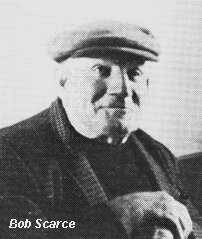 Now it was of a noble warrior
Who fought in the battle of the Alps.
He fought through the battle of Baclava
All covered with wounds and scalps.
And now the blinking war is over
Which we shall not see it anymore.
Oh the burden of the spray is to carry us away
And we'll never see a boozer anymore.
Now I'm going away, I'm going to leave you
I can, I can no longer stay.
I do not wish before to see you
Oh the ship she sails away.
And think of me when I'm a boozing
A cuddling with my donah1 on the floor
If I get drunk today just before I go away
Oh we'll never see a boozer anymore.
Fare thee well to dear old London
Fare thee well to that private stop [?]
Fare thee well to my uncle around the corner
Whose Sunday clothes I used to pop.
Fare thee well to that dear little boozing crib
Where we had many a tumble on the floor.
Oh the burden of the spray is to carry us away
And you'll never see your drummer anymore.
Now I'm going away, I'm going to leave you
For I can, I can no longer stay.
I do not wish to for deceive you
For the ship she sails away.
But think of me when I'm a boozing
A cuddling with my donah on the floor
Oh the burden of the spray is to carry us all away
And we shan't see a boozer anymore.
Fare thee well to dear Maria
Pray don't pipe your eye.
I'm just going to write you a letter
You can change the stamp close by.
Fare well to dear old Aldershot
Where we had many a tumble on the floor.
Oh the garrett near the sky
Where we'll both live and die.
And you'll never see your drummer anymore.
Now I'm going away, I'm going to leave you
I can, I can no longer stay.
I do not wish to for deceive you
For the ship she sails away.
But think of me when I'm a boozing
A cuddling with my donah on the floor
Oh if I get drunk today just before I go away
Oh you'll never see our drummer anymore.
“Good old Bob!”
1 Donah: slang for woman or sweetheart.
Bob Hart had The Burden of the Spray in his repertoire list, but never sang it to any of his collectors. Hart had worked alongside Elty Bob for many years at Snape Maltings, and learned many songs from him.
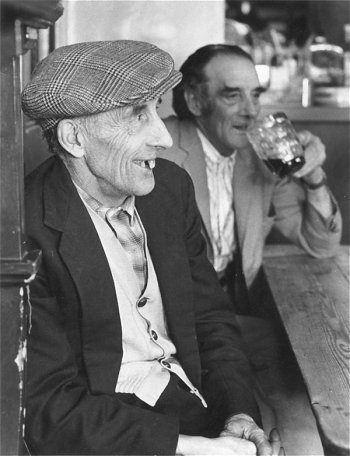 2 - 31 The Maid and the Magpie (Roud 1532)
Cyril Poacher: The Ship Inn, Blaxhall 1974
Crowd: “Come on the magpie. Come on Cyril. The old magpie.”
WR: “Order Please.”
Once there was a maid kept an old magpie.
The parson who prayed lived very close by.
And when she met the parson
They both stopped to talk
And often on the quiet they
Would go for a cosy walk.
For, her lover was a sailor;
He crossed the raging main.
He promised she would be his bride,
When he returned again
But still she let the parson
See her home from church
Kissing, never thinking
Of the magpie on the perch.
Chorus:
Oh the maid and the magpie would talk all the day
The maid would not believe all the magpie did say.
She said,”I love the parson
But don't you tell the Tar.”
And the old magpie only said, “Qua, qua.”
Now, when stationed in Gibralta,
The sailor, so it seems
Whilst he was sleeping in his bunk,
He had a funny dream
He dreamt the girl he'd left behind
On dear old England's shore
Whilst he was away she was flirting
With a half a dozen more.
So he made his passage homeward
As quickly as could be.
He landed safely at her house
But no maiden could he see.
When talking to the magpie,
Who was dancing on the perch.
And the magpie told him all about
The parson at the church.
Chorus:
Now when the sailor met his maid
He passed her with disdain.
She sued for breach of promise
For five thousand to obtain.
They brought the magpie into court
To tell the truthful tale.
And get what he required, of course,
his maiden she did fail.
Chorus:
“Well done.”
Talking birds abound in classical mythology. The present song, however, concerns a rather more down-to-earth magpie which, like the parrot in the ballad of The Outlandish Knight, is privy to its mistress’s dark secrets. Unlike the parrot, it is not bribed with promises of an ivory and gold cage - and so promptly spills the beans in court. Suggestions that the magpie may simply be the rationalisation of an older and more magical creature seems, to me, to be nothing more than a wish to reinvent old mythologies. In its present form The Maid and the Magpie came from a 19th century play of the same title, and was sung in the Music Halls by G H MacDermott (1845 - 1901). It was printed in the 1860s by at least two well-known broadside merchants and it’s likely that John Ling (born 1823), had his version from one of these sheets, and passed it on to his son Aldeman, from whom Cyril said he learned the song.
It is not a common song - Alfred Williams collected a version from Charles Hambridge, of Buscot in Berkshire, and another was found in Sydney, Australia, sung by one Jack 'Hoopiron' Lee. There was also another 'magpie' song around at a similar time.
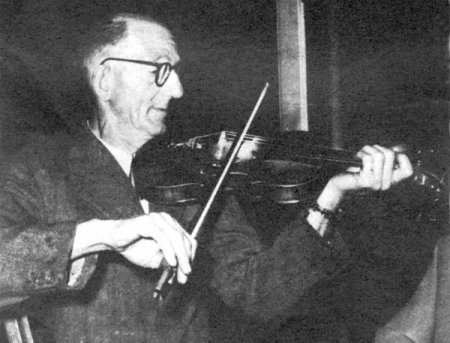 *2 - 32 Red Sails in the Sunset
Fred Eley Went (fiddle): Ipswich 1975
This was a popular song written by Jimmy Kennedy and published in 1935. Other songs by Jimmy Kennedy that could be heard being played and sung in the pubs of Suffolk were South of the Border, The Isle of Capri, Hang Out The Washing On The Siegfried Line and The Barmaid's Song. In a career spanning more than fifty years he wrote some 2000 songs, of which over 200 became world-wide hits and about 50 are all-time popular classics.
2 - 33 Unidentified Tunes
Fred Eley Went (mandolin): Ipswich 1975
*2 - 34 The False Hearted Knight (Roud 21, Child 4)
William 'Jumbo' Brightwell: Leiston 1975
JB: “The false hearted knight. Do you think we ought to have that?”
KS: “Yes.”
JB: “Are you right, sir?”
KS: “Yeah.”
JB: “The false hearted knight.”
Now it twas of a false knight
He came from the north land
He came a courting me
He had promised to take me
Down to that north land
And there his bride make me.
“So give me some of your mother's gold
And some of your father's fees
And two of the best horses out of our stable
Where there standby thirty and three.”
So she mounted upon her milk white steed
And he on his dapple and bay
And away they did ride to the great waterside
Hours before it was day.
“Jump off, jump off that milk white steed
And deliver it up to me
Six pretty fair maids I have drowned in here
And the seventh one you shall be.”
“And take off, take off that silken gown,
And lie it upon yon stone;
For I think its too rich and I think its too rare
To rot all in the salt sea.”
“If I must take off my silken gown
Then turn your back upon me.
For I don't think its fit that a villain like you
A naked woman should see.”
And stoop you down and cut that briar
That hangs so near that brim
In case it should tangle my golden cuffs
Or tear my lily white skin.
So she gave him a push and a hearty push
And she pushed that false knight in.
Crying “Lie in there you false hearted knight
Lay in there instead of me.
If six pretty fair maids you have drowned in here
The seventh one drowned thee.”
So she mounted upon her milk white steed
She led his dapple and gray
And away she did ride to her own father's hall
Two hours before it was day.
The old parrot was up in the window high
And he cried aloud and did say
“I'm afraid that some villain he came here last night
And he carried my lady away.”
Her father he was not quite sound asleep
But he never heard what that bird did say
So he crieth “What waketh my pretty Polly
Two hours before it is day?”
“Why the old cat it was up in the window high
And that cat he would me slay.
So loud did I cry that help should be nigh
To drive that cat away.”
“Well done, well done, my pretty Polly
No tales you will tell of me
Thy cage shall be made of that bright glittering gold
And the door of white ivory.”
JB: “A man name of Christie used to sing 'un. But I never heard it sung, only I heard my mother singing bits of it. But a man from near Yoxford - or Middleton - name of Ringwood, he sung it once down there in the Foot and I asked whether he'd write it out for me. He writ it out for me and sent it by post. That's how I got that one.”
One of the most well-known of the big ballads, with 672 entries in Roud’s Index. The ballad of Lady Isobel and the Elf Knight, as it’s otherwise known, has been found in various forms throughout Europe, the earliest printed text being from a German broadside dated 1550.
A L Lloyd in Folk Song in England, linked the story to an engraving on a sword scabbard dated 300 BC, which is now in The Leningrad (St Petersburg) Museum. It certainly seems to have caught the imagination of traditional singers, many versions having appeared throughout England and Scotland, though it seems not to be particularly widespread in Ireland, though I should mention that Cornelius ‘Corny’ McDaid of Buncrana, Co Donegal, sang a very full and splendid version as False Lover John.
Other recordings on CD: Bill Cassidy (Musical Traditions MTCD325-6); Sarah Porter (MTCD309-10); Jumbo Brightwell (Rounder CD1741, Veteran VT140CD); Fred Jordan (Rounder CD1775, Topic TSCD600); Mary Ann Haynes (Topic TSCD661); Lena Bourne Fish ( Appleseed APRCD1035).
2 - 35 Young George Oxbury (Roud 90, Child 209)
Alec Bloomfield: Newark, Nottinghamshire 1975
Young George Oxbury is my name
There ain’t many who know me.
And many a sly and trick I played
I'm afraid, in Lower Promey.
I never stole ox, I never stole ass
I never much of any.
But I stole sixteen of the King's fat deer
And sold them down in Davy.
I wrote a letter with my own hand
And I sent it to a lady.
When she broke the few lines open
It grieved her more than any.
“Bridle me my milk white steed
Quick saddle me my pony
For I must ride to Newcastle
For the life of my dear Geordie.”
She rode all day she rode all night
She rode as fast as any.
And she let her yellow tresses down
To plead for the life of Geordie.
And when she entered in that court
There were lords and ladies many
And down upon her knee she fell
And prayed for the life of Geordie.
And Geordie stepped up to the judge
Saying “I never murdered any.
But I stole sixteen of the King's fat deer
I sold them in down in Davy.”
Then the judge looked over his left shoulder
And thus he said to Geordie
“It's by your own confession you must die
May the Lord have mercy on thee.”
Geordie was hung with a golden chain
And like I never saw any.
Because he come of royal blood
And courted a virtuous lady.
“Now I wish I was on yonder hill
where times I have been many.
With my broadsword and pistol too
I'd have fought for the life of Geordie.”
Usually called Geordie or Georgie, this another very widespread big ballad, with 258 Roud entries. The Bloomfields appear to be the only singers to call it Young George Oxbury, and they are also the only Suffolk singers of the song apart from Charles Newby, of Reydon.
Scholars have long argued over the origin of the ballad, which exists in two basic forms. The first, from Scotland, is apocryphally ascribed to an incident involving George Gordon, fourth Earl of Huntley, who fell from Royal favour in 1554. The second possibly stems from two English 17th century blackletter broadsides which, between them, supplied most of the verses used by later printers, including Henry Parker Such of south London.
Other recordings on CD: Jasper Smith (Musical Traditions MTCD320); Levi Smith (Topic TSCD661); Harry Cox (Topic TSCD 512D, Rounder CD 1776).
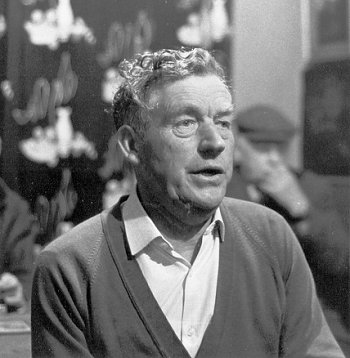 2 - 36 The Barndance
Fred List (melodeon): Framlingham 1974
Fred's barn dance is Felix Burns’ Woodland Flowers - a tune known at Blaxhall as The Shit Cart Polka (at least according to Alan Waller, so possibly / certainly unreliable, but one shouldn't forget he was an early visitor and Steve Pallant used to call it that, too). A prolific composer, Felix Burns (1864-1920) was Jimmy Shand's favourite composer; he also wrote The Dancing Dustman and Shufflin' Samuel.
2 - 37 The Morals (Roud 21233)
Alec Bloomfield: Newark, Nottinghamshire 1975
AB: Right. You will now hear the morals by Alec Bloomfield.
Please don't forget the old ones
Now they're feeble old and grey
And spare a kind thought for the others too.
Don't think yourself above them
Should you find that pot of gold
For you never know what time can bring you to.
For time is the precious thing,
All governed by the sun.
Time, time brings all things to the end,
And that's how it goes on and on and on.
For what's the life of the man,
More than the leaves on the trees
We all have our seasons
And why should we grieve.
In this great world we can be happy and gay
Like the leaves then we'll wither
And all fade away.
For there always will be singers.
Always there will be songs.
Some will come and fade away,
Others come for ever to stay.
But the sweetest songs we know,
Are those of long ago
Those dear old fashioned melodies
Our mothers used to sing.
AB: “Right! Switch her off.”
This is another of those ‘medley songs’, of which Clifford Arbon’s Egg Song is a well-known example. Steve Roud had not encountered it before, so it gets a new number. The last line rather recalls Bob Hart’s The Hymns My Mother Used to Sing.
2 - 38 Jim the Carter's Lad (Roud 1080)
Ted Cobbin with Peter Plant (melodeon): The Crown, Great Glemham 1975
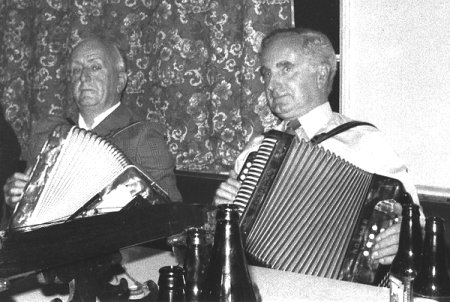 Now my name is Jim, the carter's lad
And a jolly cock am I.
I always am contented
When the weather be wet or dry.
I snap my fingers at the snow
And I whistle at the rain,
I've braved the storm for many a day
And can do so again.
Snap, crack, goes the whip
And I whistle and I sing.
I sits upon the wagon
I'm as happy as a king.
For my horse is always willing,
For him I'm never sad,
For there's none can treat a horse so kind
Than Jim, the carter's lad.
Now the girls they all do smile at me
As I go driving past,
My horse is such a willing one
And he jogs along so fast.
I've travelled a many a hundreds of miles
And that's what makes me glad;
For you'll find there beats an honest heart
In old Jim, the carter's lad.
Snap, crack, goes the whip
And I whistle and I sing.
I sits upon the wagon
I'm as happy as a king.
For my horse is always willing,
For him I'm never sad,
For there's none can treat a horse so kind
Than Jim, the carter's lad.
And now my song is ended
And I have no more to say
And with your kind permission
I will call some other day.
For to see your smiling faces
Oh it makes my heart right glad
And I hope you'll greet a kind applause
To old Jim, the carter's lad.
Snap, crack, goes the whip
And I whistle and I sing.
I sits upon the wagon I'm as happy as a king.
My horse is always willing, for him I'm never sad,
For there's none can can lead a life so good
As old Jim, the carter's lad.
Repeat Chorus.
TC: “There you are. I done my best.”
Like All Jolly Fellows that Follow the Plough, this is another popular song among English country singers up to the present day. As well as the usual southern distribution, it’s also been found in Northumberland and Yorkshire Roud knows of 66 instances, including 6 from Scotland and five having crossed the water to Noth America, and just one from Ireland. In suffolk it has also been sung by Gordon Syrett, Tony Harvey and Sam Friend.
Other recordings on CD: Jimmy McBeath (Rounder CD1834); George Townshend (Musical Traditions MTCD304).
I can remember sitting in the Lyons Tea Shop in Ipswich and reading a small-ad in the local paper, the Evening Star: ‘Accordionist Wanted at The Ship in Blaxhall on Saturday Nights’. Tempting, but I didn’t apply. But this wasn’t the 'Scary Ship' of previous years, where to walk through the door as an Outsider entailed running the gauntlet of suspicion before settling behind the fire-place that used to be about three-quarters down the room, out of sight, out of mind. In Suffolk in the late ‘60s, as elsewhere, the pubs were changing - Last Orders had been called on the Music; it was 10:50 and the minute hand was moving towards Time.
However, Friday nights were different and I started playing there under the watchful eye of Alf Richardson; “What the bloody hell do you think you’re doing, boy?” a rebuke, in ascending order of severity, applied to playing tunes too fast, “Old Time, boy, Old Time!” not playing when the hat went round and, by far, far worst of all, playing The Miner’s Dream of Home in July. I went on the annual coach outing to Yarmouth - Keith would have enjoyed that; the coach’s first refreshment-stop was Blaxhall Common. I never realised before that coaches had a bottle-opener built into the boot. After a few months, Fred List started to turn up, usually with George Scott, a retired accordion player, and his wife. After a year or so, I left Fred List to it at the Ship and finally ended up in Bramford Cock for ten years.
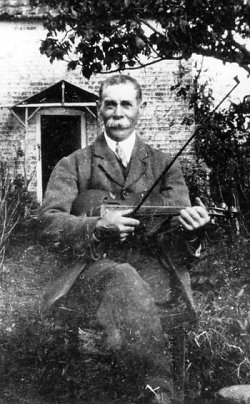 This, I think, is where Keith came in. And a good job, too, as nobody else would have produced Sing, Say or Pay! I certainly learned a lot. Perhaps not surprisingly, we hardly ever met up. In fact, one of the few occasions I remember our paths crossing was when he and Mike Yates dropped into The Fresh in Saxmundham one Saturday night on their way to see Dolly Curtis. I’d never been to Dennington, so Oscar, Jen and I decided to go with them. Then the phone behind the bar rang. It’s for Oscar; they’d got no music at The Ship - could we go over? ”Well, we can’t let old Jack down, can we?” says Oscar. No, we couldn’t, so I never got to Dennington.
When Traditional Music reported that an Eley Whent of Woodbridge had been recorded by Keith, I did wonder if that was the same person as Fred ‘Fiddler’ Went from Ipswich who I’d been sitting next to for nearly four years in the Bramford Cock? The Fred Went who’d been playing in Bramford since before the War with pianist Alf Keeble and drummer Ted Alexander; the Fred Went, whose stated greatest musical achievement was the night he sat in for the regular drummer at the Ipswich Music Hall, the Hippodrome? It wasn’t until Sing, Say or Pay! appeared that I found it was the same person; it’s strange to think I spent so many hundreds of hours in the company of someone with links to Blaxhall and never knew it. Our ignorance was mutual and unless Cyril Poacher had appeared on The Generation Game, I can’t see how it would have come up in the conversation. Fred Went did a weekly ‘party-piece-medley’ of "Turkey in The Straw and that lot", the three of them, as they must have done for years; it’s a pity Keith didn’t record them together, but there you go. Anyway, I think Keith must have done his recording after Fred had stopped playing at the Cock through ill-health; if not, Fred never mentioned it.
I remember standing outside the Farnham George with Oscar Woods and George Woolnough, waiting for a bus back to Ipswich. George Woolnough entertained us with some pretty pithy thoughts on his omission from Sing, Say or Pay! It didn’t help that his father-in-law, Shirt Burrows, had got a whole page photograph. It was in Farnham George I heard ‘the great’ Walter Read - I later discovered Keith had heard him too, but never recorded him. Anyway, the bus arrived. “Well, was it worth it, Mr. David?” Oscar asked. I got on the bus and sat on the back seat; they waved me out of sight. Was it worth it? I’d say it was, wouldn’t you, Keith?
David Nuttall
The introduction was written by Paul Marsh, who also did the song transcriptions; the ‘In His Own Words’ section by the late Keith Summers; performers’ mini-biographies by Rod Stradling, drawn mainly from Keith’s writings; tune notes by David Nuttall, Philip Heath-Coleman and Rod Stradling; the remainder by Rod Stradling.
The recordings were all made by Keith Summers, mastered from digital copies made by the British Library, where the original recordings are housed. Editing and noise reduction by Paul Marsh.
The photographs have also been supplied by several different people: Keith Summers, John Howson, Mike Yates and Carole Pegg.
My sincere thanks to all of them - and to everyone else who has contributed so willingly of their time and expertise:
• Danny Stradling - for proof-reading.
• Peta Webb - for supplying Keith’s originals of many of the photos.
• National Sound Archive of the British Library, where the original recordings are housed - for digital copies of Keith's recordings.
• Steve Roud - for providing MT with a copy of his Folk Song Index, whence came some of the historical information on the songs. Also for help with finding songs and allocating Roud numbers to new entrants to the Index.
Booklet: editing, DTP, printing
CD: production by Rod Stradling
A Musical Traditions Records production
© 2007
[Track Lists]
[Introduction]
[In His Own Words]
[The Performers]
[CD One]
[CD Two]
[Credits]
Article MT204
Site designed and maintained by Musical Traditions Web Services Updated: 15.5.07